Showing posts with label libraries. Show all posts

Monday, November 16, 2020

Call for Participation: Study on Accessibility and Makerspaces!

 I'm delighted to share this awesome opportunity from Dr. Amelia Anderson and Dr. Abigail Phillips!:


"We are preparing a study about accessibility in public library makerspaces. This study will help to inform public librarians how to make their spaces more accessible for all, creating more inclusive libraries. We want to know about your experiences in public libraries and in makerspaces. We will be conducting a series of focus groups with disability self-advocates and public librarians across the United States.

We would like to invite you to take part in this process, to share your knowledge and experiences with us. For your participation, you will receive a $30 Amazon gift card. Your involvement is voluntary. Any information you share with us will be kept private and confidential. If you want to participate, please complete this brief online form"

If you have any questions, please contact the principal investigators, Dr. Amelia Anderson and Dr. Abigail Phillips: amanders AT odu DOT edu ; abileigh AT uwm DOT edu"


Accessibility in Making: Perspectives from Disability Self-Advocates is supported by the Institute of Museum and Library Services (IMLS) through the National Leadership Grants for Libraries.

Wednesday, September 9, 2020

Join me! Trauma-Informed Care: An Introduction for Libraries

UPDATE 9/25/2020: The class is now full! Here goes nothing...

Trauma-Informed Care: An Introduction for Libraries, Oct 5-Nov 15 through UW-Madison iSchool.

 So. Things are interesting, to say the least.

A cat sitting next to a computer, watching the screen
For instance, Larry attends Zoom meetings.

When I last taught "Trauma-Informed Care: An Introduction for Libraries," one of my main objectives was to build empathy for people with backgrounds in trauma through sharing real-life experiences as myself, a person with a brain rewired to expect stress due to trauma. The course was approached with the assumption that there would be a mix of people who would see themselves in the content, people who had some familiarity with the content, and people who possibly needed some convincing that trauma isn't just some buzzword or excuse.

Well, times have changed since *checks post date* last September. My April 30 webinar on trauma responses during a pandemic has been viewed over THREE THOUSAND times. Only like 5 of those were my parents (Twenty, tops). Every day there's new evidence of a population whose brains are overflowing with stress and are acting on ill-planned, counter-intuitive, and counterproductive attempts at self-preservation (to be clear, I'm talking about people who ignore reasonable health guidelines and/or are violent about their need for a haircut, for instance; and not people protesting police brutality). Amid this backdrop public-facing service workers are being met with vitriol for trying to keep themselves and the community safe.

The need for a commitment to trauma-informed principles is, I'd say, pretty clear.

My course on this topic is not the do-all-end-all in healing the world, but it can help you and your colleagues approach work in a way that is helpful for everyone (including yourselves).

Topics I'll cover include:

Saturday, May 2, 2020

Being Trauma-Informed During a Pandemic: Webinar Archive and Other Links

A few weeks ago, Emporia State put out a call to people who were going to present at the Oregon Library Association's annual conference to see if we'd be willing to turn our workshops into webinars. I had a great preconference in the works with a former student from my Disability Community in the Library course, but that wouldn't fit into a 40-minute webinar. I instead proposed a webinar on "WTF is happening to your brain", and was accepted. I figured I'd piece together a couple of other resources I made and bam! Easy-peasy.

HAHAHAH welp, the VERY last thing my brain wanted to let me do during a pandemic was write about dealing with trauma during a pandemic. 
If you need a transcript of the webinar for personal use, feel free to email me at brycekozla at gmail.


I only practiced it once before the live viewing, and I don't think I'll be revisiting it anytime soon. If you watch it and want to process it with someone, please do that with someone who is not me unless you know me personally, thanks. I've talked before about the power of validation before and as much as I appreciate where this is coming from, I need to invest my energy in specific places right now. (this is not for people who have already reached out to me, because this is a boundary I didn't set until right now. Thank you)

I'll talk about less heavy stuff all day though. Have you heard about Fostering Readers

One thing I wanted to make sure to say plainly because I didn't in my presentation: the pandemic is hitting BIPOC communities harder than white communities. There is also a lot of historical trauma and institutional oppression rearing its head for many marginalized communities when dealing with work, government benefits, and hospitals.This is NOT the time to say that equity and inclusion is not a priority. They are CENTRAL to the health of your staff and community. ALL of the time.

I wanted to make sure to share some links that were mentioned in the presentation:

I also wanted to be sure to highlight some other wonderful resources:
"Pandemic! Productivity! Life! Hacks!" (the title is a little tongue-and-cheek)

Thank you so much for your interest in this webinar. Hang in there.


Wednesday, March 25, 2020

WTF Is Happening to Your Brain and What You Can Do About It

There's been something I've been thinking about a lot lately but haven't really had the energy to talk about it in any comprehensive way.

I still don't think I'm going to, because investing energy where it needs to go is incredibly important right now. But I will say this:

Visiting this blog, right here, right now, I am allowing you the space to admit and accept that what we're going through is a stressful and potentially traumatizing situation.

People are different. Two people can experience the exact same thing and one can emerge traumatized and the other unscathed.

One thing that might help right now is knowing what might be going on with your brain and central nervous system. The following is something I shared yesterday with friends and family. It's based on the training I received from Trauma-Informed Oregon, which led to me to create a unique introductory course in Trauma-Informed Care that is library-specific. It's not a lot but I hope it helps.


Sunday, March 31, 2019

Investing Energy: Staying on Top of Things

My best laid plans the past few years have always seemed to hit snags. For instance: this is my first real blogpost since my blog address change. BDP officially closed on December 31. I had intended to write a heartfelt send-up for the readers who have been around since the beginning. My plans were thwarted, however, as I had to work on investing energy in a large-scale way   as I worked through the following things in the past 6 months:

-A car accident involving a man-hole cover flying at my car soon after my 36th birthday (as if my feelings about my birthday aren't complicated enough, the Final Destination-ness of this event stuck with me longer than I care to admit).
-My spouse's 16-year-old cat, Stubbins, nearly dying three days before Christmas (Caleb stayed home last minute to care for him). We've decided to not pursue any further intervention care.
-My parked car being involved in a second accident, this time with a U-Haul on New Years Day. It was nearly totaled, which meant we would spend another year with one car between us; which has become increasingly untenable. The auto body shop was able to find a way to keep the cost just low enough for us to keep it, which I am so grateful for.

Add to this my day and weekend work: At my day job, I was trained as a trainer with Trauma-Informed Oregon and I worked on extensive learning modules based on trauma-informed care (keep an eye out for an online course coming soon that will NOT use these modules but will address related topics); and in my "free" time I created presentations and ran a course on the Disability Community in the library. Usually, I'm able to enjoy vastly different work between my day job and my side stuff. At one point a few months ago, I had just finished writing about  historical trauma and institutional oppression; the next day I walked to the coffee shop and opened up my laptop to a slide that just said: "Disabled People are Burdens."

Yeah, it's been fun.

Through all this I'm thinking about stuff I've put in place in order to mitigate particularly stressful situations and stay on top of things. It's really a huge deal for me; and even though I don't have everything under control at all times, I thought I'd share some things that have helped:

-Got my meds right: yes, again. It's a process.

-Have one notebook where EVERYTHING lives: I first got this idea from Shawn Brommer, who presented on her organizational style at the 2015 ILEAD Wisconsin workshop. One thing I've definitely borrowed from her style is writing down things I've accomplished that didn't make my to-do list but I accomplished anyway. My notebook has become such a mainstay in my my office that my boss and two of my coworkers also carry them around everywhere.


Various college ruled notebooks, dated to indicate the timeframe each one contains.


-Mark emails on my to-do list: and I don't cross them off until I hit send. Emails can sometimes be easy things to do, though I have a tendency to write them and forget to send them until later. Meds help, but marking them with a little box on the side of my to-do list can alert me to do things I can do to keep things going. If I don't have much time at my desk one day, it's often more important to get emails out in order to keep projects moving than trying to work on a larger project.

-Question why I'm putting something off: I recently have been reading more about procrastination as it's related to anxiety, and it really makes a lot of sense to me. If I'm feeling particularly willful about a task, I do my best to reflect on why that is, and engage in a short de-stress exercise in my toolkit, and it's usually enough to get over it and get started. Way more often than not, interestingly enough, the anxiety is left over from past toxic work environments; I can acknowledge that my anxiety about a task is valid, but is not useful in a work environment in which I feel relatively safe. Reaching out to coworkers to help me remember this has been especially helpful through change.

-Install web tools to increase focus: random web usage when I'm putting stuff off has been common for me, particularly anymore on the weekends. When I'm having a  hard time reeling in my work-related anxiety, I actually find it soothing (though COMPLETELY UNPRODUCTIVE, to be fair) to Google the same things over and over again. At one point several years ago, my anxiety was particularly about my place in the world outside of my workplace, which I assumed (irrationally, I know) I would die at before I had the opportunity to leave. Consequently, the thing I Googled the most was, like, my own name. My own self-preservation had completely taken over. To disrupt this tendency anymore, I use tools like Block Site. Seeing the block screen is often enough for me to engage in a de-stress activity and rededicate my brain.

-Write things down as a I remember them: As I go through the week, occasionally my mind will wander in a meeting or on non-work time and I remember something that I need to do. I'll either email the idea to myself, or write it in the margins of my notebook with a big star. At the beginning of the next week, all big-starred and emailed items are added to my to-do list.

-Have meeting days and non-meeting days where possible: this is a hugely useful change I'm moving toward thanks to my coworker Katie. I'm sure I'm not alone in that my brain works differently at meetings versus at my desk, and it can be tough to transition if meetings are scattered throughout the week. While scattered meetings are not completely unavoidable, I try to find at least one day every two weeks where there are no meetings scheduled, and rope off that time on my calendar. This is time to dig into large projects and catch up.

Staying on top of things can be overwhelming especially when life goes pear-shaped. But it's been powerful to figure out a system that works for me in a job as varied as the one I've got.

What are some things that help you stay on top of things?

Tuesday, October 16, 2018

Responding to Caregivers Looking for Information on Disability

Saturday night I returned from a whirlwind 19 hours in Las Vegas for #NVLA18, where I presented on how library staff need to examine the lessons they've internalized about disability if we really want to get serious about accessibility and welcoming the disability community in the library.

My thoughts on how to talk about the disability community in the library continue to evolve as I learn and grow as a self-advocate. I'm realizing that for multiple reasons we can't talk about disability in the same frame as other marginalization, though it's important to acknowledge that particularly the intersection of race makes a member of the disability community more vulnerable to the societal effects of the abled narrative (follow Vilissa Thompson at Ramp Your Voice for more on the intersection of race and disability). There are specific challenges in regards to accessibility that disabled people face in society and the workplace; and often un-examined feelings about the disability can lead to a neglect of basic access needs.

So at #NVLA18 I tried my hand at a way to talk about accessibility and the way the abled narrative inserts itself into the framework in our profession. I framed the presentation through three overarching lies the abled narrative tells us; how each plays out in libraries; and some things we can do to counter and rebalance our thinking. A tall order for 50 minutes! But hey, I had a lot to say.

One part of the presentation was not only particularly difficult to write but also prompted some discussion afterward, and I thought it might make a good post for everyone to consider:

Thursday, November 16, 2017

Librarians with Disabilities: Accessibility in Action

Accessibility Series logo

Amanda M. Leftwich is currently a Circulation Supervisor at a small fine arts college in Philadelphia, PA. She tweets as @thelibmaven. 

As a person of color with visible and invisible disabilities, navigating librarianship has been a complex and oftentimes frustrating experience. Most conversations about equity and diversity in librarianship solely involve race or gender, but exclude people living with disabilities or chronic illness. Dealing with health concerns in a rigid environment such as libraries can seem impossible; however there are ways to thrive in the field with disability.

Understand your rights under the Americans with Disabilities Act (ADA) 1991 & ADA Amendments Act of 2008 (ADAAA)! Although these protections set in place by law they are under attack due to H.R. 620. It’s still important to learn about both laws. The ADA is the original law granting people with disabilities civil rights protections. The ADAAA expanded the terms of “disability” which previously had not counted learning disabilities under civil rights protections. Your disability may be under the protected class, but you have to learn the basics of the laws first.

Reasonable accommodation exists for a reason; use it. Under the Equal Employment Opportunity Commission (EEOC) policy employees with a disability have the legal right to request accommodations to perform their job duties. For example, employers providing changes to schedules, assistive technology, an interpreter, removing job duties that are deemed harmful to one’s disability, and moving office space are all examples of reasonable accommodations. Employees may request reasonable accommodation at any time (including the interview process). One must provide written notification of outlined restrictions from a medical professional. Although most librarians shyaway from the topic of reasonable accommodation, it shouldn’t be avoided if it’s needed to complete job tasks! Most requests can be filled cheaply and without much hassle to employers.

Don’t feel the need to apologize for your disability. Most librarians are used to working with few colleagues. This can create familiarity in the workplace. However, this doesn’t mean that anyone has to give detailed information about their health issues. The only person who should be concerned about your disability is your health care professional. Others will frequently ask questions (to the point of harassment) about your illness, especially those that are invisible. Quite frankly, it’s none of their business. You don’t have to prove nor should you feel guilty about having an illness while “looking perfectly healthy”. You do not need to explain anything related to your health to your colleagues, friends, neighbors, or anyone that you aren’t comfortable with providing.

Save your Spoons. Spoonies (anyone suffering from a chronic invisible illness) understand the importance of pacing themselves. I suffer from Meniere's Disease, an invisible chronic illness that impacts balance and hearing. Some days, I have enough spoons to complete all of my duties and tasks. Others, I only have one spoon just to get out of bed. For me, saving my spoons means not completing certain balance-heavy library projects (shifting, moving heavy carts, or anything that requires lots of walking around the Library, etc.) and on my “drop attack” days; it means calling out sick. Prior to being diagnosed with Meniere’s, I had to call out frequently due to issues with vertigo. I felt like a failure until my parents reminded me that “sick days are there for a reason”. I never used sick days prior, simply because I wasn’t sick. Not even for mental health days; this was a mistake. Sick days (and personal days) are there for a reason- they aid in you allowing your body time to recover from an episode, if necessary. If you need them due to illness (or mental health), TAKE THEM. Never be afraid to put your health ahead of your job.

Have compassion for yourself. We all know that one librarian that’s been with the Library since they “graduated from Library school”. The super dedicated, always dependable person ready to answer a reference question in a jiff. Most importantly, never called out sick a day in their career! As a spoonie, this will not be your testimony. Perfection does not exist. You’ll need to accept yourself at whatever stage in life you’re in. This will mean accepting the fact you won’t be able to control your illness. You are more than your illness! Remind yourself every day that your self-worth doesn’t revolve around your profession, but life outside of work.

Acknowledge that others won’t get it. Others will question your illness. What’s wrong with you? Are you really sick? You look fine to me. Unfortunately, questions and statements like these will continue to occur. In the face of chronic illness, most people have no idea what to say. This is not your problem. Only you understand how your disability affects you. Don’t concern yourself with the thoughts of others.

Get involved in the conversations about accessibility. Unfortunately, the conversations about inclusiveness and access oftentimes exclude librarians with disabilities. Organizations like the Association of Higher Education and Disability (AHEAD) and ADA Center aim to train and promote scholarship for disability justice. Although these organizations don’t fall under librarianship, we can carry the conversations had in those spaces into our field. Write about your experiences as a disabled librarian to library blogs (this one), chats, discussion boards, etc. Follow disability justice leaders such as Mia Mingus, Emily Ladua, Lydia Brown, and Haben Girma to get involved in a larger discussion about accessibility to bring these ideas into the libraries.

Compassion in libraries shouldn’t only be directed towards patrons we serve, but also the librarians and paraprofessionals working in these settings. Don’t be afraid to challenge the norm and fight for your place in the field. There’s more than enough room for all of us, including those with disabilities.

Want more on accessibility? Click here for more in the Accessibility Series.

Are you a disabled/neurodivergent/chronically ill library staff member who would like to guest post? Click here for more information on writing a post of the accessibility. Posts on accessibility by abled members of the library community are not accepted.

The Accessibility Series was made possible by a grant from Awesome Without Borders.

Thursday, September 21, 2017

Youth Services in Action: Here's What We Do

Black text on a green background: "Youth Services: Here's What We Do"
When libraries consider disbanding age-specific departments, it particularly affects youth services in a way that it might not in other sections of the library. This tweet at Librarian Problems, which right now has 700 engagements between Twitter and Tumbler, plays on this idea: Homer Simpson gasps as he's met with a room full of babies; this GIF is accompanied by the phrase, "When a reference librarian wanders into storytime". In the episode this GIF comes from, the room full of babies is silent save for their pacifiers; in storytime, as we know, this is not the case.

 It's a funny concept, which is why so many liked, retweeted, and reblogged it. But those engagements and the comments it's garnered definitely tell me: it's funny because it's true. 

I have no doubt that plenty of libraries disband age-specific departments in a supportive way that values the strengths of all staff, and I've even seen it happen at libraries in my cooperative. Heck, my program is doing this when we soon on-board our new Youth Services Librarian, as the two positions were originally conceived as "Early Literacy" and "School Services" but will now work in a more collaborative, project-based way. The pearl clutcher in me, however, is ever the cynic and the skeptic.

There are lots of things to consider when thinking about the design of services to youth in your public librarian, and librarians much smarter than me have already begun to tackle them. Karen Jensen of Teen Librarian Toolbox and Melissa Depper of Mel's Desk have some awesome, required reading threads. Kendra Jones started a Facebook conversation about a recently announced PLA Conference session; the post and comments are edifying and worth a read. Tess Prendergast wrote an open letter to PLA  about it complete with a citation list, and was able to get the title changed, at least. Please follow those links. I'll be here.

I am so grateful that my cooperative has a position like mine, and that it's valued so much we are expanding our program. I do coordinating things, but I also take advocating for youth services and our youth services library staff seriously. I try my best to help our library staff break down barriers to youth access and provide the highest quality services to youth possible. It's a job that can be tough but I'm honored that the trust has been bestowed upon me to do it.

Tuesday, March 21, 2017

Social Sustainability in the Workplace

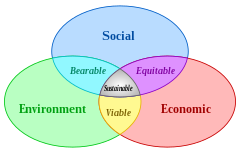
A Venn Diagram that intersects social
sustainability with environmental and
economic sustainability.
A situation can be viable, but if it is not
bearable or equitable it cannot be
sustainable.
At our team meeting every month, a volunteer shares a sustainability tip to help us be more sustainability-conscious. This month was my turn, and I shared a little about social sustainability.

According to Social Life, a UK-based enterprise specializing in place-based innovation, social sustainability is "a process for creating sustainable, successful places that promote well-being, by understanding what people need from the places they live and work. Social sustainability combines design of the physical realm with design of the social world – infrastructure to support social and cultural life, social amenities, and systems for citizen engagement and space for people and places to evolve."

Social sustainability has many aspects to it, and you can read more about it at the United Nations Global Impact. Since our tips focus on small changes we can do today, I decided to focus on the one that might be the one the most immediately within our control. Namely, the idea that a workplace is not sustainable without employee retention; and workplaces lose money in production and staffing every year due to staff burnout; and it’s important with everything going on that we are sure to make our workplaces as socially sustainable as possible. I was in fact so happy to learn about this whole concept, because it rectifies the problems I have with the term "self care"-- while I was on board for awhile, "self care" has seemed to become this catch-all of workplace happiness and quite frankly, I've begun to think about it as a way that toxic workplaces can blame employees for their own low morale or other reactions to systemic workplace toxicity. This article helped to validate those feelings when I thought it was just me. I like viewing workplace culture through the social sustainability lens because it seeks to work on the workplace as well as the individual. It's about how we can make small changes to improve our workplace, not just about how we can steel ourselves against workplace toxicity as if it is an unexplained phenomenon that cannot be helped.

Stressful situations can flip your lid, and I know regular readers are familiar with this term but here is a video that explains it (it talks about kids, but we all need it!) Here are some things that have worked for me to stay engaged when it's tough:

Sunday, November 13, 2016

Accessibility Series: Definitions and 5 Quick Tips

Accessibility series logo
UPDATE: Welcome, new readers! if you're interested in guest posting, please click here for more information. 


On Saturday, I was honored to present at the Oregon Library Association Children's Services Division fall workshop, as part of an afternoon on diversity. I figured a lot of what I talked about might be a good starting point for this accessibility series! Note: I am very new to this activism and, probably like many of our guest posters, still battling my own internalized ableism. If you see something that is incorrect or needs to be amended or updated, please email me at brycedontplay at gmail dot com. 
Here we go:

Thursday, March 3, 2016

Healthy Boundaries in Work Relationships: Self Care times a Million

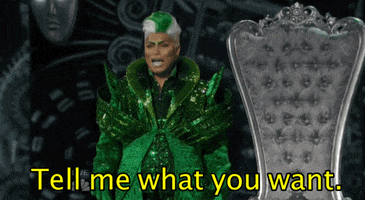
“I’ll be what you want until I can’t be that anymore.”

A person in a sparkly green jacket.
Text reads, "Tell me what you want."

I long ago figured out that this was like my motto in romantic-type relationships before I met my spouse. In December 2005, I had recently recovered from an 8 month relationship (that we ridiculously drug out to over a year) followed closely by a three week relationship. The timetables were different, but the arc of the relationship was painfully the same: Figure out what you want me to be, try to be that, get exhausted being that, force a breakup.

Then I met Caleb. I was tentative at first, not trusting myself. And while that sounds terrible as a romantic comedy plot, it actually helped me create the boundaries I didn’t know I needed for us to get to know each other at a slower pace, and form a more lasting relationship.

I’ve held a few different positions in my 11 professional years, and some working relationships have looked similar to my old romantic habits. The feeling that comes up when I examine any dissatisfying or failed relationships is the feeling of being consumed. And when I have attempted to set boundaries once that feeling starts to happen, there are hurt feelings and broken trust.

And I’ve been doing lots of examining lately, because I’m in the first year of a new job again. And as the old demotivational poster goes:

Thursday, September 10, 2015

"It's Always Been Done That Way": An Unsolicited Rant

I have a confession to make: I’m a pearl clutcher.


Okay, so maybe not exactly, but I have caught myself in the title of this post a few times.

While this fact isn’t the most inspiring thing in the world, it’s true. I’ve done some debatably-innovative-depending-on-who-you-ask-but-whatever-I’m-proud things. AND, I’ve uttered the phrase “It’s always been done this way.” Sometimes with a judgy air for the practice; sometimes in earnest and with a tinge of defensiveness.


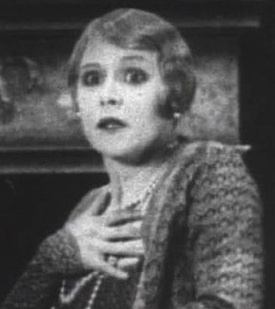
Black and white picture of a woman clutching her
pearl necklace.
I thought that maybe talking a little about it might shed some light for the “pearl clutchers” and the “change agents” alike, because the perception seems to be that we can’t find common ground; that we’re either one or the other. And I don’t think it has to be that way. In fact, I think that working together, and playing to each other’s strengths, can help us create a culture of librarianship that is overtly kind. And not just because you’re working tirelessly on the Next Big Thing OR because you love every piece of the collection so much that you can’t bring yourself to weed. I see you all. And you have value. And we all should feel valued, because that’s the only way we can do our best work. Together.

Friday, December 12, 2014

Kindergarten/1st grade Librarian Class Visit


Newspaper clipping of Grandpa Simpson shaking his fist.
Headline reads "Old Man Yells at Cloud".

In November, a K-1 split teacher at a local parochial school wanted a tour of the North community branch library, which is about a half-mile away and therefore walking distance for the small class.

Except, you know, when the high is 17 degrees.

After the class rescheduled twice and cancelled at basically the last minute once, we probably could have just said, "hey, we'll see you in the Spring." But truthfully, this wasn't one of our "regular field trip patron" classes and I really wanted to seize the momentum, not letting them forget about us. So, with the promise that they would in fact schedule a tour in the Spring, I went about concocting an engaging visit that would get a bunch of kindergarten and first graders sufficiently pumped about the library without them actually getting to go to the library, where many of them had never been before. They didn't even have a library at school!

Thursday, October 3, 2013

Story Action Pod: Halloween Edition!

"Mullet. You know what it is."
An alternate title for this could be: How I dressed as a child's answer to a literacy extension activity for Halloween, and you can too!

Two years ago I created the fastest Story Action Pod I ever produced. I searched my library's catalog for "monsters", and came up with "Even Monsters Need Haircuts" by Matthew McElligot.

And the outcome was hilarious, as demonstrated by the submitted answer to your left.
In fact, I liked it so much, that I went as it for Halloween.

Tuesday, July 9, 2013

So You Want to be an ALA Emerging Leader

So I'm back from ALA Annual, everyone!

I've had this post in the hopper for awhile but I figured I'd wait until after the poster session to put it up, in case it turned out I really hated everything. There were a few weeks in there that were pretty hectic, and I wasn't sure if we could pull it off, but we rallied and got everything done on time! Here's a link to my finished product that is part of a four-part series of adult learning tutorials, a project proposed by LIRT. This year we were able to pick our own projects to work on, and this one was my second choice. You wouldn't believe how many people were like, "What does adult learning have to do with being a children's librarian?" And I'm just like, well, everything, actually.
Grumpy Cat looking grumpy. Meme-style texts reads,
"Apply for Emerging Leaders? Fine. Maybe I will."


My real reason for writing this post is the lack of help I found in my first stages of applying for Emerging Leaders. As I mentioned before, when I searched for terms like, "I applied for Emerging Leaders and was rejected how will I ever get over myself" I'd get results that were written by the Done-Emerged about whether or not I should apply.


Tuesday, June 4, 2013

Congratulations! Holy Crap: Tips to Survive your First Professional Job

When I was 22, I was desperately seeking literally any job that I could use my bachelor's degree for a job in education or writing. Though I was open to all over the country, I only applied for jobs where I knew people, so I could use their addresses when applying, which turns out to be a terrible idea. But, you know, YOLO.

I ended getting a call the Tuesday before Labor Day. By Thursday I was in the office of a principal in rural FL, being interviewed for the position of Reading First reading coach, a position that technically needed, according to the grant they ended up hiring me with, an actual Master's in Reading, which, at the time, I happened not to have (I did know a lot about reading, however; it was the credential that I was supposed to need). I was appointed as the TAP mentor for special areas and special education, which I also had no business doing.

The principal told me they needed a reading coach to attend their district meeting in 2 hours, and could I attend?

Thursday, May 23, 2013

Show Me the Awesome: Iron Fist 3: Adult Management

This week I'm glad to join the many awesome people posting for Show Me the Awesome: 30 Days of Self-Promotion, started and curated by Liz Burns, Sophie Brookover, and Kelly Jensen. Here's a post at Stacked explaining the project, and All the Awesome is collected here.

Artwork by John LeMasney, lemasney.com
I'm writing this post jointly with my new coworker, Brooke, who writes about her adventures in librarianship at Reading with Red.

As a former educator and classroom management survivor, I've written a few times about managing our Children's Department, complete with a to-scale boat and a life-size giraffe (here and here, respectively). It's been a trip, and we're finally getting to a place where our space is used by children mostly as it is intended.

I realized, though, that now we've gotten a handle on the kids, we're experiencing something that I haven't written about before:


Monday, April 29, 2013

Time Crunch Librarian

Click here to see our slides
A few weeks ago I was able to present with Anna (Future Librarian Superhero) and Anne (So Tomorrow) at the Michigan Library Association's Spring Institute in Lansing, MI. Though Anna, Anne and I talk through various social media outlets, I just met Anna in person last May at the WAPL conference, and neither of us had met Anne until the day of the presentation. If you're wondering how we managed to stay relatively on message for this hour long break-out session, I'll have you know it was due to the wonder of technology. We mostly brainstormed on Twitter and Google chat, and created a shared PowerPoint on Google Drive. While adding to the presentation, you could see where someone else was adding to their part or doing some revising. It was simultaneously a magical and creepy experience.

Tuesday, February 5, 2013

Library Signage: Not Just for Bathrooms Anymore

Okay so here's one picture of food.
I was recently able, by the grace of my place of employment, a generous Emerging Leaders sponsorship by ASCLA, and my credit card, to attend ALA Midwinter in Seattle, WA. It was an awesome experience and as a good librarian I should probably write about it and should've Instagrammed all my meals and spent a longer time on the exhibit floor.

But I just want to share a couple pictures, mostly because I want my boss to see them and talk about them and this is probably the best format for the time being. The Seattle Public Library is an awesome space for a lot of things. What I focused on to bring back to my department was signage, because when focusing on space this might be cheapest-versus-most-beneficial thing to do. Also, I've been inspired by Storytime Katie's rules signage; small, well-communicated info gets everyone where we need to go.
So anyway:

Sunday, January 6, 2013

The Think-Aloud Librarian

Source
Over the weekend, I helped an 8 year old girl find a "Jack and Annie book." I led her to the Magic Treehouse books, talking the whole time: "Oh yeah! The Magic Treehouse books. I know exactly where those are. They are in our Chapter Book section, under O. The author's last name is Osbourne. So here's books by authors who start with N.... Okay, O! Here we go, Osbourne. Right here."

Sound familiar?
You're a Think-Aloud Librarian.

Why Do We Do This? 
It sounds like we're talking to ourselves, right?
In the education world, we call it the "think-aloud": a little tidbit that helps students follow your train of thought or reasoning; or, in a student-directed lesson, help you understand the student's train of thought or reasoning. In either instance, it's a chance an opportunity for learning.