Showing posts with label trauma. Show all posts

Monday, July 14, 2025

Join me! Trauma-Informed Care in the Library starts October 13

 Trauma-Informed Care: An Introduction for Libraries starts October 13!

Sign up by September 29 for a 10% discount.

I'm happy to announce that I will be running Trauma-Informed Care: An Introduction for Libraries through UW-Madison iSchool again this Fall. 

Like my past, well-reviewed courses, this course is designed to have an extremely reasonable workload and will be a mix of reflection, action, and tips you can use right away. The class is asynchronous, which means we won't be meeting live and you can engage with each week's content when you can. Each week there will be one or two discussion questions. There will be final project that will consist of anything that will help you going forward (a presentation to your board, a letter to your director, a blue print, something else? It's up to you!).

As always with my courses, you're welcome to download all the material to share among others in your library, so I hope you will see this as a good investment. Trauma-Informed Care: An Introduction for Libraries is steeped in my lived experience and so may be different from other training you may have gotten about these concepts.

This course about Trauma-Informed Care has been developed with trauma-informed care in mind in its structure. 
NOTE: This course has been well-reviewed by students who have lived experience in trauma. While I do have some tips that work for me peppered in the content, this course is not a therapy support group and I am not a medical professional. This course can give you some insight into what might be going on with your brain/central nervous system right now, but it is not a cure for your stress. I say this not to be mean but to manage expectations. If you are looking for more things like mindfulness practices, I'd like to suggest you look into activities related to dialectical behavioral therapy. It covers mindfulness as well as interpersonal effectiveness, distress tolerance, and emotional regulation.

Ready to register? Sign up here. 
Want to read more about my take on trauma-informed care? Click here to check out the "trauma" tag.

Tuesday, March 1, 2022

Anti-filicide toolkit for the Disability Day of Mourning

 March 1st of every year is observed as the Disability Day of Mourning to remember disabled victims of filicide–disabled people murdered by their family members or caregivers. The memorial site can be found here.


I wanted to be sure to share this Anti-filicide toolkit created by the Autistic Self Advocacy Network. As trusted members of our communities, library staff and other information professionals can help as a support for the disability community and caregivers. I've written about some small ways we can be inclusive and disrupt isolation in the past:

Related, I wanted to share this recent video by Ask a Mortician about the considerations made-or not- for architecture vs. human lives. It names a library in New York, and I couldn't help but make additional connections between library concerns for aesthetic rather than accessibility.
 
Apologies for not being around lately. It's been A Time. Will check in again soon.

Monday, August 2, 2021

Join Me: Trauma-Informed Care in Libraries Starts Sept 13

 WE GOT A NEW KITTEN


An orange manx kitten sitting on a lap in from of a laptop computer

This is Hacksaw. Stubbins (19) and Larry (11) are still around; Caleb and I just figured it was good timing. Caleb has always wanted an orange manx!

Okay, so now I got that out of the way:

Trauma-Informed Care: An Introduction for Libraries starts September 13!

Sign up by August 30 for a 10% discount.

Like my past, well-reviewed courses, this course is designed to have an extremely reasonable workload and will be a mix of reflection, action, and tips you can use right away. The class is asynchronous, which means we won't be meeting live and you can engage with each week's content when you can. Each week there will be one or two discussion questions. There will be final project that will consist of anything that will help you going forward (a presentation to your board, a letter to your director, a blue print, something else? It's up to you!).

As always with my courses, you're welcome to download all the material to share among others in your library, so I hope you will see this as a good investment. Trauma-Informed Care: An Introduction for Libraries is steeped in my lived experience and so may be different from other training you may have gotten about these concepts.

NOTE: This course has been well-reviewed by students who have lived experience in trauma. While I do have some tips that work for me peppered in the content, this course is not a therapy support group and I am not a medical professional. This course can give you some insight into what might be going on with your brain/central nervous system right now, but it is not a cure for your stress. I say this not to be mean but to manage expectations. If you are looking for more things like mindfulness practices, I'd like to suggest you look into activities related to dialectical behavioral therapy. It covers mindfulness as well as interpersonal effectiveness, distress tolerance, and emotional regulation.

Ready to register? Sign up here. Last time my roster and the waitlist filled quickly!
Want to read more about my take on trauma-informed care? Click here to check out the "trauma" tag.

Wednesday, March 31, 2021

Talking Trauma and Libraries on the Library Leadership Podcast

 A few weeks ago, Adriane Herrick Juarez at the Library Leadership Podcast reached out to me to be a guest on the show and talk about trauma-informed libraries. It was my first ever podcast! This conversation gave me the opportunity to give a quick run-down of trauma-informed basics in a way that I hadn't before outside of my course and training materials I made locally. 

Circle with a white, blonde woman in a blazer smiling at the camera in front of a purple background


I recorded this on a Friday evening, after I had facilitated a 2-hour meeting and attended one more. As such, I broke one of my personal cardinal rules of presenting  and had about 4,000 cups of coffee that day. I stutter and mispronounce words I write but barely say. But, the content! The content is there!

New here?

If you're here because of the podcast, nice to meet you! I'm Bryce. I started this blog in 2011 with easy reader book reviews. They were terrible, so I quickly switched it up to talking about field trips and youth programming and reading research. A few years ago, I turned tides again and started using this space to be vocal about trauma and disability justice in libraries. What a bait-and-switch, eh? I swear I used to be funny, even!

Old here?

Head on over to listen to my episode of the Library Leadership Podcast. I emphasize workforce wellness and quote Uncle Ben from Superman. I don't know if transcripts are ready yet, but I will send you the Q&A list (which is basically the transcript) if you email me at brycekozla at gmail.

Bonus Links:

I mention in the podcast that I recommend reading/watching Laura van Dernoot Lipsky. Here are the resources I mention:

The Age of Overwhelm: Strategies for the Long Haul

Beyond the Cliff

I couldn't have a post like this without a shout-out to Renewals: Promoting Empathy and Self-Preservation in the Workplace. I really admire Kaetrena Davis Kendrick's award-winning work.


Thursday, February 18, 2021

Trauma-Informed Communication: webinar recording and bonus links!

 A couple weeks ago I got an email from my landlord with no context (just "please see attached" and a generically-named attachment. It was information about my utility bill. It looked like I had to pay something, but turns out I didn't.

Now, I know there's no way of them knowing that something like this would activate my stress response; but also, realistically, this is a pandemic. A time when we hear news stories everyday of people being evicted. A time when the housing and jobs crunch here in my area has only been exasperated by income loss across the community.

Did this notice activate my stress response? Yes. But did it also make me reflect on other interactions and inspire me to write to Emporia State with an idea for a new webinar? Also yes.

This webinar was tough to develop and present and I'm actually taking two days off work as a result (I did this without knowing how I'd feel just in case but: Thanks, Past-Bryce. You're the best. Love, Bryce). I share this just so you know where I'm at; I may not have the best time replying to emails right now. Thanks for understanding.

Here's the blurb for it for some more info:

2020 was quite the year, to put it mildly. 2021 promises new opportunities and challenges amid continued demands for normalcy against the backdrop of a collective traumatic event. Oh, by the way, did you respond to that email from a few weeks ago? No, the other one. There’s no doubt the pandemic and other high-profile crises are affecting our brains and our lives. How can we effectively communicate with one another in order to maintain trust and transparency for our staff and patrons?

Bryce Kozla, presenter of “Being Trauma-Informed During a Pandemic” is back with some go-to tips for successful interactions when possibly everyone involved is affected by prolonged, toxic stress.


There's a part in the middle where it cuts out for a minute, but it comes back, don't worry!

I wanted to make sure to share some links related to this presentation:
Grounding/Safety Box example (I like this one because it gets into explanations)

I also wanted to be sure to highlight some other wonderful resources:
"Pandemic! Productivity! Life! Hacks!" (the title is a little tongue-and-cheek)

Thank you so much for your interest in this webinar. Hang in there.


Wednesday, September 9, 2020

Join me! Trauma-Informed Care: An Introduction for Libraries

UPDATE 9/25/2020: The class is now full! Here goes nothing...

Trauma-Informed Care: An Introduction for Libraries, Oct 5-Nov 15 through UW-Madison iSchool.

 So. Things are interesting, to say the least.

A cat sitting next to a computer, watching the screen
For instance, Larry attends Zoom meetings.

When I last taught "Trauma-Informed Care: An Introduction for Libraries," one of my main objectives was to build empathy for people with backgrounds in trauma through sharing real-life experiences as myself, a person with a brain rewired to expect stress due to trauma. The course was approached with the assumption that there would be a mix of people who would see themselves in the content, people who had some familiarity with the content, and people who possibly needed some convincing that trauma isn't just some buzzword or excuse.

Well, times have changed since *checks post date* last September. My April 30 webinar on trauma responses during a pandemic has been viewed over THREE THOUSAND times. Only like 5 of those were my parents (Twenty, tops). Every day there's new evidence of a population whose brains are overflowing with stress and are acting on ill-planned, counter-intuitive, and counterproductive attempts at self-preservation (to be clear, I'm talking about people who ignore reasonable health guidelines and/or are violent about their need for a haircut, for instance; and not people protesting police brutality). Amid this backdrop public-facing service workers are being met with vitriol for trying to keep themselves and the community safe.

The need for a commitment to trauma-informed principles is, I'd say, pretty clear.

My course on this topic is not the do-all-end-all in healing the world, but it can help you and your colleagues approach work in a way that is helpful for everyone (including yourselves).

Topics I'll cover include:

Saturday, May 2, 2020

Being Trauma-Informed During a Pandemic: Webinar Archive and Other Links

A few weeks ago, Emporia State put out a call to people who were going to present at the Oregon Library Association's annual conference to see if we'd be willing to turn our workshops into webinars. I had a great preconference in the works with a former student from my Disability Community in the Library course, but that wouldn't fit into a 40-minute webinar. I instead proposed a webinar on "WTF is happening to your brain", and was accepted. I figured I'd piece together a couple of other resources I made and bam! Easy-peasy.

HAHAHAH welp, the VERY last thing my brain wanted to let me do during a pandemic was write about dealing with trauma during a pandemic. 
If you need a transcript of the webinar for personal use, feel free to email me at brycekozla at gmail.


I only practiced it once before the live viewing, and I don't think I'll be revisiting it anytime soon. If you watch it and want to process it with someone, please do that with someone who is not me unless you know me personally, thanks. I've talked before about the power of validation before and as much as I appreciate where this is coming from, I need to invest my energy in specific places right now. (this is not for people who have already reached out to me, because this is a boundary I didn't set until right now. Thank you)

I'll talk about less heavy stuff all day though. Have you heard about Fostering Readers

One thing I wanted to make sure to say plainly because I didn't in my presentation: the pandemic is hitting BIPOC communities harder than white communities. There is also a lot of historical trauma and institutional oppression rearing its head for many marginalized communities when dealing with work, government benefits, and hospitals.This is NOT the time to say that equity and inclusion is not a priority. They are CENTRAL to the health of your staff and community. ALL of the time.

I wanted to make sure to share some links that were mentioned in the presentation:

I also wanted to be sure to highlight some other wonderful resources:
"Pandemic! Productivity! Life! Hacks!" (the title is a little tongue-and-cheek)

Thank you so much for your interest in this webinar. Hang in there.


Wednesday, March 25, 2020

WTF Is Happening to Your Brain and What You Can Do About It

There's been something I've been thinking about a lot lately but haven't really had the energy to talk about it in any comprehensive way.

I still don't think I'm going to, because investing energy where it needs to go is incredibly important right now. But I will say this:

Visiting this blog, right here, right now, I am allowing you the space to admit and accept that what we're going through is a stressful and potentially traumatizing situation.

People are different. Two people can experience the exact same thing and one can emerge traumatized and the other unscathed.

One thing that might help right now is knowing what might be going on with your brain and central nervous system. The following is something I shared yesterday with friends and family. It's based on the training I received from Trauma-Informed Oregon, which led to me to create a unique introductory course in Trauma-Informed Care that is library-specific. It's not a lot but I hope it helps.


Thursday, December 19, 2019

Why "What Happened to You?" Isn't Trauma-informed

I just finished up my first run of my Trauma-Informed Care: An Introduction for Libraries course.

I hope to run it again next year, but something came up that I felt I should clear up.

There are a lot of different training opportunities lately coming at trauma in the library at different angles.

Quite a few of them start attempting to shift thinking about trauma with the notion that trauma-informed care "seeks to shift the clinical perspective from 'what’s wrong with you' to 'what happened to you'". I can't pinpoint the origin of this quote, but it's been used by such respected organizations as SAMHSA.

This phrase, quite deliberately, does not appear in any of my training materials. That's because I don't believe it's true.

title text in black on a blue and green background


At its most basic, I can understand what this is trying to do: make people who have not experienced trauma that has reshaped their brains start to blame circumstance rather than the people themselves when they have a frustrating interaction. Apparently, wondering what happened to someone is supposed to build empathy so we can act more compassionately.

I humbly submit that thinking this way can have the opposite impact, and instead can inspire pity and possibly resentment. I also contend that asking this question isn't trauma-informed, and is potentially harmful. It also assumes that library staff do not have backgrounds in trauma, which is not universally true.

To demonstrate how this framing might be problematic: here's how a person whose brain has been rewired to expect stress might answer these questions, speaking from experience:

Monday, September 16, 2019

New Course this Fall! Trauma-Informed Care: An Introduction For Libraries

As long-time readers may recall, I've been interested in and studying topics related to trauma since I first learned about the Adverse Childhood Experiences study in 2013.  I've written a lot related to trauma since, and to be quite honest my research has transformed the way I approach my work, as well as my relationships to other people and the world in general. In April 2018, I was chosen by Trauma-Informed Oregon to be trained as a community trainer, and have developed and delivered library-specific training to local library staff, which has been well-received.


So I'm so pleased to announce that I will be running the course:
Trauma-Informed Care: An Introduction for Libraries through UW-SLIS Continuing Education, November 4-December 15, 2019! Register before October 20 for a 10% discount!

Like my past, well-reviewed courses, this course is designed to have an extremely reasonable workload and will be a mix of reflection, action, and tips you can use right away. The class is asynchronous, which means we won't be meeting live and you can engage with each week's content when you can. Each week there will be one or two discussion questions. There will be final project that will consist of anything that will help you going forward (a presentation to your board, a letter to your director, a blue print, something else? It's up to you!).

As always with my courses, you're welcome to download all the material to share among others in your library, so I hope you will see this as a good investment.

I've said on Twitter previously that preparing for this course has made my Disability Community in the Library course feel like Sunday brunch. Like that course, Trauma-Informed Care: An Introduction for Libraries is steeped in my lived experience and so may be different from other training you may have gotten about these concepts.

Here's some of the topics we'll cover:

Tuesday, April 16, 2019

Creating a Trauma-Informed Presentation

Back in April of last year, I was one of 17 participants selected as part of a community cohort to be trained by Trauma-Informed Oregon on trauma-informed care. The intent of these train-the-trainer workshops was for participants to take the material and make it specifically relevant to our organizations/industries. Knowing that libraries are "a helping profession" and that many of us come into with backgrounds in trauma, I wanted to make my delivery of this content as trauma-informed as possible.

Last week, I held two "countywide conversation" sessions to introduce the concept of trauma-informed care to local staff. It was an in-person iteration of some of the internal Trauma-Informed Care training modules I created and posted on our extranet. A flipped-classroom model, I reasoned, would help staff process the material on their own before having to talk to anyone about it, and the sessions would allow room for discussion for those who'd want to talk about. I also prepared a presentation to introduce the material for these sessions, in the likely event that a staff person would want to attend but not have time to view the referenced modules beforehand (or would need an in-person intro to understand how trauma-informed care is meaningful to our work).

Having attended plenty of conference sessions that didn't take their own advice over the years, I set out to make this presentation as trauma-informed as possible.

Here are some considerations I made in order to achieve this goal. You might want to try them out for even unrelated presentations!

Registration recommended, not required: It's trauma-informed to have registration, so I could anticipate how many people would attend and plan accordingly. I also wanted to make it okay, however, for staff to feel like they could drop in without crashing the party (also trauma-informed). We got 30 registrations, and we ended up with 30 participants-- though, some registrants couldn't attend in the end, and some attendees didn't register. At the time I started planning, I had 22 registered and planned for 40 (so maybe +25-75% attendance if you wanted to try this).

  • I also sent out a Doodle Poll before I opened registration so I could gauge the interest in all parts of the county. The hope was that the highest amount of people who wanted to attend could be able to, and not have to travel across the county to do so. I didn't catch everyone this way, but I was able to do my best to make sure the locations were equitably chosen around the county.
  • Registration was open for two weeks, with a reminder a week before. The registration email included a registration link, location and links to Google Maps of the locations, and the agenda with approximate times. If we had the time I might have opened the registration for longer, but we were butting up against local summer planning as it was.
  • Reminder email to attendees: I collected the email addresses of registered attendees, and sent out an email to them the Monday of the sessions. I thanked them for registering, and then set out some expectations: there will be snacks but feel free to bring your favorite snack or drink; knitting and other fidgeting is welcome; and to dress however they felt best (whether that be sneakers or a suit).
Coloring sheets and fidget toys: I had ordered a box of assorted fidget toys online, but they hadn't arrived in time for the sessions. So I printed off some coloring sheets and brought some crayons to help attendees mitigate stress and process information. The coloring sheets and fidget toys now live in a basket in our conference room, and I'm intending to bring them to every meeting I can remember to bring them to!

Voice Amplifier: A few months ago I got a voice amplifier and I thought this would be a great place to try it out-- in meeting rooms with possible ambient noise. I'm blown away by how inexpensive it was and how good it works. I get not wanting to hook yourself up to a surround sound system for a few people (and yes, social anxiety is a real thing and no, introversion and social anxiety are not the same). Not only it is an accessible practice to wear a mic (calm down, abled people, please don't be self-righteous about the one thing you're actually committing to); once you do get into practice of it you'll realize just how noisy the rest of the world inside meeting rooms truly is. Best part about a voice amplifier for small gatherings is you just have to hook yourself and go, and if you DO have social anxiety you can turn it up enough to where everyone can hear but you don't "sound like you're on a mic", which could help with comfort.

Housekeeping at the beginning of the presentation: Things like duration, reminders, or behavior expectations (it's okay to stand or walk around, etc). Apologies but I do not care at all if the same Library Thought Leaders who hate powerpoint find a short introduction that includes housekeeping boring and I "lose" them. I care more about "losing" staff who may literally not be able to process information without knowing where the exits are and it's okay to leave; or staff whose stress response is activated and are at risk of disassociating and take solace in knowing the exact amount of time remaining before they don't have to heavily employ coping mechanisms if they want to stay. People with backgrounds in trauma are in your presentations too.
  • Icebreakers: if you have to have one, send it ahead of time. That way everyone is listening to everyone else and not worrying about what they'll say when it's their turn.
Choice, choice choice: Plan participatory options into your session and refer to them. No mandatory participation. No "you have to work with someone you don't know very well." Make it okay to say "pass."

These tips are more poignant for heavier topics, but could be useful for any presentations. As trauma-informed care tells us:
-we have no idea what it took (in the day, in the life) to get a person in front of us, and plenty of people have acute stress responses we might not even guess
-EVERY consideration we make is an opportunity for re-traumatization or healing. We may as well try to be healing!

(also, creating a presentation that's accessible can also be trauma-informed.)


Sunday, March 31, 2019

Investing Energy: Staying on Top of Things

My best laid plans the past few years have always seemed to hit snags. For instance: this is my first real blogpost since my blog address change. BDP officially closed on December 31. I had intended to write a heartfelt send-up for the readers who have been around since the beginning. My plans were thwarted, however, as I had to work on investing energy in a large-scale way   as I worked through the following things in the past 6 months:

-A car accident involving a man-hole cover flying at my car soon after my 36th birthday (as if my feelings about my birthday aren't complicated enough, the Final Destination-ness of this event stuck with me longer than I care to admit).
-My spouse's 16-year-old cat, Stubbins, nearly dying three days before Christmas (Caleb stayed home last minute to care for him). We've decided to not pursue any further intervention care.
-My parked car being involved in a second accident, this time with a U-Haul on New Years Day. It was nearly totaled, which meant we would spend another year with one car between us; which has become increasingly untenable. The auto body shop was able to find a way to keep the cost just low enough for us to keep it, which I am so grateful for.

Add to this my day and weekend work: At my day job, I was trained as a trainer with Trauma-Informed Oregon and I worked on extensive learning modules based on trauma-informed care (keep an eye out for an online course coming soon that will NOT use these modules but will address related topics); and in my "free" time I created presentations and ran a course on the Disability Community in the library. Usually, I'm able to enjoy vastly different work between my day job and my side stuff. At one point a few months ago, I had just finished writing about  historical trauma and institutional oppression; the next day I walked to the coffee shop and opened up my laptop to a slide that just said: "Disabled People are Burdens."

Yeah, it's been fun.

Through all this I'm thinking about stuff I've put in place in order to mitigate particularly stressful situations and stay on top of things. It's really a huge deal for me; and even though I don't have everything under control at all times, I thought I'd share some things that have helped:

-Got my meds right: yes, again. It's a process.

-Have one notebook where EVERYTHING lives: I first got this idea from Shawn Brommer, who presented on her organizational style at the 2015 ILEAD Wisconsin workshop. One thing I've definitely borrowed from her style is writing down things I've accomplished that didn't make my to-do list but I accomplished anyway. My notebook has become such a mainstay in my my office that my boss and two of my coworkers also carry them around everywhere.


Various college ruled notebooks, dated to indicate the timeframe each one contains.


-Mark emails on my to-do list: and I don't cross them off until I hit send. Emails can sometimes be easy things to do, though I have a tendency to write them and forget to send them until later. Meds help, but marking them with a little box on the side of my to-do list can alert me to do things I can do to keep things going. If I don't have much time at my desk one day, it's often more important to get emails out in order to keep projects moving than trying to work on a larger project.

-Question why I'm putting something off: I recently have been reading more about procrastination as it's related to anxiety, and it really makes a lot of sense to me. If I'm feeling particularly willful about a task, I do my best to reflect on why that is, and engage in a short de-stress exercise in my toolkit, and it's usually enough to get over it and get started. Way more often than not, interestingly enough, the anxiety is left over from past toxic work environments; I can acknowledge that my anxiety about a task is valid, but is not useful in a work environment in which I feel relatively safe. Reaching out to coworkers to help me remember this has been especially helpful through change.

-Install web tools to increase focus: random web usage when I'm putting stuff off has been common for me, particularly anymore on the weekends. When I'm having a  hard time reeling in my work-related anxiety, I actually find it soothing (though COMPLETELY UNPRODUCTIVE, to be fair) to Google the same things over and over again. At one point several years ago, my anxiety was particularly about my place in the world outside of my workplace, which I assumed (irrationally, I know) I would die at before I had the opportunity to leave. Consequently, the thing I Googled the most was, like, my own name. My own self-preservation had completely taken over. To disrupt this tendency anymore, I use tools like Block Site. Seeing the block screen is often enough for me to engage in a de-stress activity and rededicate my brain.

-Write things down as a I remember them: As I go through the week, occasionally my mind will wander in a meeting or on non-work time and I remember something that I need to do. I'll either email the idea to myself, or write it in the margins of my notebook with a big star. At the beginning of the next week, all big-starred and emailed items are added to my to-do list.

-Have meeting days and non-meeting days where possible: this is a hugely useful change I'm moving toward thanks to my coworker Katie. I'm sure I'm not alone in that my brain works differently at meetings versus at my desk, and it can be tough to transition if meetings are scattered throughout the week. While scattered meetings are not completely unavoidable, I try to find at least one day every two weeks where there are no meetings scheduled, and rope off that time on my calendar. This is time to dig into large projects and catch up.

Staying on top of things can be overwhelming especially when life goes pear-shaped. But it's been powerful to figure out a system that works for me in a job as varied as the one I've got.

What are some things that help you stay on top of things?

Friday, June 29, 2018

Investing Energy-What's Working For Me: The News Edition


“When one is engaged in suffering, there is so much more to it than keeping it all together”.
This is a quote from Laura van Dernoot Lipsky, founder of the Trauma Stewardship Institute. She said this in a TEDx talk in 2015 titled “Beyond the Cliff.”

Okay.

So.

There is a lot going on.

I get that it can be hard to focus, and hard to know where our focus is supposed to land. I believe this is by design.

I posted before about investing energy. This summer is similar, since my spouse’s full-time gig fell through and we’re adjusting to another new normal where we work mostly opposite schedules and reconfigure our finances. It’s also a little different, for the above reasons and other more personal ones. But I find myself reflecting more on how to cultivate energy, and how to make more “room in the margins” as Laura van Dernoot Lipsky puts it. (I saw her speak a few months ago and it was transformative. Check out her new book, “The Age of Overwhelm: Strategies for the Long Haul” coming out in July).

These are things that have been working for me. You are welcome to try them. You are welcome to mock me for them. Whatever you want to do, really, but I figured I’d share in case they might help:

Tuesday, February 6, 2018

Investing Energy in Trying Times: What's Working for Me

Comedian Maria Bamford, looking stern. Text says:
"If you stay alive for no other reason at all, please
do it for spite."

I’ve started to write this post a couple times and then stopped, deleting. Because it’s hard to talk about and think about. Because I might say the wrong thing. But then Abby (who I recently met IRL, which was awesome) told me that I’m one of the reasons she feels as though she can talk mental health as a library professional, so here we go.

Disclaimer: this post promises to be at the very least, self-indulgent and/or deeply personal. It is absolutely a million percent about me and has no implications for anyone else. That said, if something I talk about here sounds helpful to you, you’re welcome to try it.

Disclaimer 2: yes, I am extremely privileged, and I acknowledge that.

Tuesday, March 21, 2017

Social Sustainability in the Workplace

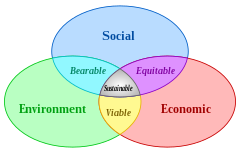
A Venn Diagram that intersects social
sustainability with environmental and
economic sustainability.
A situation can be viable, but if it is not
bearable or equitable it cannot be
sustainable.
At our team meeting every month, a volunteer shares a sustainability tip to help us be more sustainability-conscious. This month was my turn, and I shared a little about social sustainability.

According to Social Life, a UK-based enterprise specializing in place-based innovation, social sustainability is "a process for creating sustainable, successful places that promote well-being, by understanding what people need from the places they live and work. Social sustainability combines design of the physical realm with design of the social world – infrastructure to support social and cultural life, social amenities, and systems for citizen engagement and space for people and places to evolve."

Social sustainability has many aspects to it, and you can read more about it at the United Nations Global Impact. Since our tips focus on small changes we can do today, I decided to focus on the one that might be the one the most immediately within our control. Namely, the idea that a workplace is not sustainable without employee retention; and workplaces lose money in production and staffing every year due to staff burnout; and it’s important with everything going on that we are sure to make our workplaces as socially sustainable as possible. I was in fact so happy to learn about this whole concept, because it rectifies the problems I have with the term "self care"-- while I was on board for awhile, "self care" has seemed to become this catch-all of workplace happiness and quite frankly, I've begun to think about it as a way that toxic workplaces can blame employees for their own low morale or other reactions to systemic workplace toxicity. This article helped to validate those feelings when I thought it was just me. I like viewing workplace culture through the social sustainability lens because it seeks to work on the workplace as well as the individual. It's about how we can make small changes to improve our workplace, not just about how we can steel ourselves against workplace toxicity as if it is an unexplained phenomenon that cannot be helped.

Stressful situations can flip your lid, and I know regular readers are familiar with this term but here is a video that explains it (it talks about kids, but we all need it!) Here are some things that have worked for me to stay engaged when it's tough:

Wednesday, March 9, 2016

Building Relationships from the Ground Up: An Interview with a Natural

In my last post, I came to the conclusion that one foundation of self-care is creating and maintaining healthy boundaries in working relationships.

Having moved across the country in the past year, I’m in the process of creating and maintaining an all-new set of relationships. And if my social media newsfeeds are to be believed, making IRL friends as an adult is something that a lot of people struggle with.
Three people throwing their fists in the air in unison.
Text reads, "Team friendship!"

To help me start with this reflection, I looked to the person in my life that is probably the best relationship-builder I know: my spouse, Caleb. Nearly all the people I now call friends are people I’ve met through Caleb. He has been asked to stand at weddings several times and he’s a godfather to two. His best friends are those he’s been friends with since FOREVER. And their friendships are not just of convenience, since we’ve moved so far from his hometown in Florida and they still keep in touch frequently. He tells basically every FB friend “happy birthday” and while I don’t understand it he sees is as an important Facebook Friend Role.

Thursday, March 3, 2016

Healthy Boundaries in Work Relationships: Self Care times a Million

“I’ll be what you want until I can’t be that anymore.”

A person in a sparkly green jacket.
Text reads, "Tell me what you want."

I long ago figured out that this was like my motto in romantic-type relationships before I met my spouse. In December 2005, I had recently recovered from an 8 month relationship (that we ridiculously drug out to over a year) followed closely by a three week relationship. The timetables were different, but the arc of the relationship was painfully the same: Figure out what you want me to be, try to be that, get exhausted being that, force a breakup.

Then I met Caleb. I was tentative at first, not trusting myself. And while that sounds terrible as a romantic comedy plot, it actually helped me create the boundaries I didn’t know I needed for us to get to know each other at a slower pace, and form a more lasting relationship.

I’ve held a few different positions in my 11 professional years, and some working relationships have looked similar to my old romantic habits. The feeling that comes up when I examine any dissatisfying or failed relationships is the feeling of being consumed. And when I have attempted to set boundaries once that feeling starts to happen, there are hurt feelings and broken trust.

And I’ve been doing lots of examining lately, because I’m in the first year of a new job again. And as the old demotivational poster goes:

Monday, January 4, 2016

I Resolve to Rock in 2016: Choice. Empowerment. Strengths. Skills.

Well everyone, I've had quite a year! As I was thinking about a reflections post, my thoughts ended up at a resolutions post; and while I'm really not one to make resolutions, I figured some considerations and commitments for the New Year might be in order. So here's one for Storytime Undergroud's Resolve to Rock campaign.

Possibly the most challenging, most nerve-wracking, but overall most rewarding thing I added to the library conversation in 2015 was "It's Always Been that Way: An Unsolicited Rant" (Sept). Since then, I've been thinking a lot more about trauma-informed workplaces, and even asked my team members to join for a day-long training with Trauma Informed Oregon. I was so delighted with the feedback on our attendance, and it's spurred so many conversations.

This week I was again reminded of my dedication to a trauma-informed workplace when reading "Private Lives" at Hi Miss Julie,  which is not only a triumphant return to blogging for Julie, whose articles have continued to inspire far passed their posting dates; it also has clearly struck a chord in the library world for different reasons.

One thing that makes this post so powerful, I think, is her approach: She talks about a problem; she talks about what works for her, AND she talks about a time when she was personally involved in the type of ethical issue she ponders.

What I have seen happen so often with conversations like this is that they can spiral into a conversation made up of "don't" posts. And I truly hope that doesn't happen. Because I have a real sense that many individual librarians whose frustration translates to acting in questionably ethical ways come from backgrounds in trauma. Because when your lid is flipped, you're unable to think logically. What people in this position may respond to is not more shame, To be honest, not many people do, in general. I know I don't. And it's not that I think we need to treat people with kid gloves, but I DO think that we need to act in trauma-informed ways (and I really do think Julie's post is framed very well through this lens Seriously, go back and read it!). Because here's the thing:

Thursday, March 12, 2015

Libraries and the ACE Study: an Iron Fist Joint Post with Anna Donaldson, MSW


Anna Donaldson is a Departmental Analyst with the State of Michigan Division of Continuous Quality Improvement (DCQI) which monitors child welfare compliance and quality across the state. In the near future, she will be joining the clinical research team as Research Coordinator at the Momentous Institute in Dallas, TX as she as recently relocated with her husband to the Dallas/Fort Worth area. This new opportunity at the Momentous Institute will allow Anna to work with the team to gather and analyze data surrounding children's social/emotional growth and how the role of education can positively impact a child's ability to self-regulate, self-aware, and increase educational outcomes for at-risk children. Anna's main areas of interest are child welfare, specifically the impact of trauma on children and families, and improving quality of services provide to this population.

Bryce is Bryce, Anna's sibling, who obviously did not write Anna's bio.