Showing posts with label presentation. Show all posts

Tuesday, April 27, 2021

How Can I Tell If This is a Harmful Representation of Disability?

A few weeks ago, I was honored to present a preconference on disability justice in libraries with a former student, Jennifer. It was awesome to talk about the overarching lies that the abled narrative tells us and having Jennifer talk about the ways that her library is countering these lies right now.

As I continue to learn and grow in my understanding of disability justice, my preconference (Inspirations, Burdens, and Other Lies: The Disability Community in the Library) continues to grow with me through many iterations, from the confronting name change to the examples I cover to how I cover it.  The following is information that didn't make it into the presentation this time, but it was referenced and provided afterward.

This is not intended to be an exhaustive list, but is definitely a starting off point. I hope you find it helpful!

"Books and Media: A Disability Justice Approach"


When evaluating titles to recommend about disability, here are some things you’ll want to consider:


-Does the book focus on the experiences of a disabled character, or does it focus more on an abled sibling or friend and experiences of the disabled character from their perspective? A lot of media has been created from the perspective of abled people, leaving disabled people acutely aware of how we’re viewed and what society expects from us. Our self-esteem can consequently be formed around other people rather than our own self worth.

-Is the disabled character as fleshed out as other characters, or do they seem to not have thoughts or experiences independent of the abled characters? Besides having few disabled main characters, disabled side characters often are a metaphor or a tool through which an abled main character grows as a person. A clear message to disabled people here is that we aren’t people in the same way abled people are people. This is untrue. Disabled people are people, just like abled people are people, and we deserve our own stories.

-Does the disabled character have special abilities, extraordinary wisdom, otherworldly patience and kindness, or another quality to “make up” for the disability and increase their worth to abled characters? It can be great to see superheroes with disabilities, don’t get me wrong. But if a character is given powers so that it somehow compensates for their disability and makes them “good enough” to exist, disabled readers without superpowers can learn that they aren’t “good enough” just as they are.

-Are any good traits of the disabled character qualified in terms of their disability? (examples: “She was so stunning I hardly noticed her crutches”; “she was surprisingly smart for someone with her condition”) Disabled people have plenty of good qualities that don’t need to be couched in relation to disability; but lines like this tell disabled people plenty about how our worth will be measured.

-Can the character be happy living with their disability, or does their happiness increase when they do things that may be medically ill-advised in order to be more like abled people? Does a disabled person go against medical advice to show how brave or spontaneous they are? This is a common trope where a disability is a metaphor for something “holding back” an abled person. Abled people can read books with this theme and feel inspired. What disabled people learn is that we’ll never live a full life because we are disabled. This is untrue, and harmful.


-Does the character need to “overcome” their disability to achieve success, or is success possible with a disability? Disabled people are under no obligation to overcome their disability; living with a disability in itself is pretty badass. Unfortunately, media rarely teaches this message. Instead, we’re taught that we need a narrative of overcoming disability in order to claim space among abled people, or to explain and then minimize our disabilities in order to fit in.

-Are analogies made about abled characters “overcoming” negative traits like meanness and disabled characters “overcoming” disability, as if disability and meanness are the same? 

One way media uses disability as a metaphor is for a disabled character to overcome their disability while an abled character overcomes their past as a bully, for instance, being forever changed by the disabled character. Aside from the disabled person being used as a prop, it’s a tall order to burden disabled readers with the expectation that their disability means they need to have superhuman kindness and compassion. The world can be frustrating for disabled people, and there should be room for us to display anger and annoyance as well as gratitude. It’s not our job to teach abled people to be basically decent humans. These types of tropes, however, teach us that we shouldn’t automatically expect respect or even basic human decency from abled people, and any negative interaction is up to us to rectify.

-Does the disabled character spend a lot of time wishing they were abled? Just because it’s difficult for abled writers to imagine being content with living as a disabled person, doesn’t mean that disabled people constantly curse their luck. If we do, it’s mostly because of reminders that abled people don’t have to plan as much as we do, and can generally expect their basic access needs will be met at any given time. A disabled person could learn through media that we are expected to dislike our disabilities, which can be detrimental to our self-esteem.

-Are there any anti-disability slurs in the book? Do characters use the r-word? What about words like “m*ron” or “cr*zy”? There are lots of imaginative negative words to use without resorting to shortcuts to describe antagonists in a story, even if these words are used in dialogue to demonstrate how “mean” a character is.

-As a reader, how do you feel about the disabled character in general? As a whole, what does this book communicate to the reader about disability? What would this book add to a disabled reader’s self-concept? This is basically what it boils down to. Admittedly, it can be difficult to gauge whether a book or movie is a good representation of disability. But it can help to try to answer the question of what this media told you about the disabled experience. If you’re left feeling grateful you’re not the disabled character, that’s not a good sign.

 The truth is, decent representation--and especially #ownvoices titles -- are so few and far between that if you recognize the above tropes, a piece of media may still be an important piece of your collection until a time when it can be weeded and replaced by a more worthy representation, lest disabled children don't see themselves on your shelves at all (this is a point I would make about disability specifically, and only in some cases. It is possible for nothing to be better than something if that something is harmful to a child's fragile and growing sense of self). But promotion, obviously, is different.

I know that we can't always know everything about a book before we order it, and we rely on reviews a lot. One more way the abled narrative finds its way into publishing is in reviews themselves. Here is an article by Nicola Griffith on spotting ableism in a book review.

Wednesday, March 31, 2021

Talking Trauma and Libraries on the Library Leadership Podcast

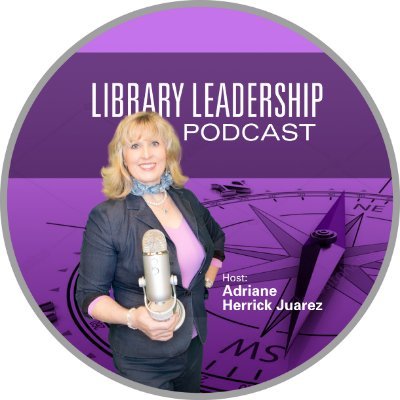
 A few weeks ago, Adriane Herrick Juarez at the Library Leadership Podcast reached out to me to be a guest on the show and talk about trauma-informed libraries. It was my first ever podcast! This conversation gave me the opportunity to give a quick run-down of trauma-informed basics in a way that I hadn't before outside of my course and training materials I made locally. 

Circle with a white, blonde woman in a blazer smiling at the camera in front of a purple background


I recorded this on a Friday evening, after I had facilitated a 2-hour meeting and attended one more. As such, I broke one of my personal cardinal rules of presenting  and had about 4,000 cups of coffee that day. I stutter and mispronounce words I write but barely say. But, the content! The content is there!

New here?

If you're here because of the podcast, nice to meet you! I'm Bryce. I started this blog in 2011 with easy reader book reviews. They were terrible, so I quickly switched it up to talking about field trips and youth programming and reading research. A few years ago, I turned tides again and started using this space to be vocal about trauma and disability justice in libraries. What a bait-and-switch, eh? I swear I used to be funny, even!

Old here?

Head on over to listen to my episode of the Library Leadership Podcast. I emphasize workforce wellness and quote Uncle Ben from Superman. I don't know if transcripts are ready yet, but I will send you the Q&A list (which is basically the transcript) if you email me at brycekozla at gmail.

Bonus Links:

I mention in the podcast that I recommend reading/watching Laura van Dernoot Lipsky. Here are the resources I mention:

The Age of Overwhelm: Strategies for the Long Haul

Beyond the Cliff

I couldn't have a post like this without a shout-out to Renewals: Promoting Empathy and Self-Preservation in the Workplace. I really admire Kaetrena Davis Kendrick's award-winning work.


Thursday, February 18, 2021

Trauma-Informed Communication: webinar recording and bonus links!

 A couple weeks ago I got an email from my landlord with no context (just "please see attached" and a generically-named attachment. It was information about my utility bill. It looked like I had to pay something, but turns out I didn't.

Now, I know there's no way of them knowing that something like this would activate my stress response; but also, realistically, this is a pandemic. A time when we hear news stories everyday of people being evicted. A time when the housing and jobs crunch here in my area has only been exasperated by income loss across the community.

Did this notice activate my stress response? Yes. But did it also make me reflect on other interactions and inspire me to write to Emporia State with an idea for a new webinar? Also yes.

This webinar was tough to develop and present and I'm actually taking two days off work as a result (I did this without knowing how I'd feel just in case but: Thanks, Past-Bryce. You're the best. Love, Bryce). I share this just so you know where I'm at; I may not have the best time replying to emails right now. Thanks for understanding.

Here's the blurb for it for some more info:

2020 was quite the year, to put it mildly. 2021 promises new opportunities and challenges amid continued demands for normalcy against the backdrop of a collective traumatic event. Oh, by the way, did you respond to that email from a few weeks ago? No, the other one. There’s no doubt the pandemic and other high-profile crises are affecting our brains and our lives. How can we effectively communicate with one another in order to maintain trust and transparency for our staff and patrons?

Bryce Kozla, presenter of “Being Trauma-Informed During a Pandemic” is back with some go-to tips for successful interactions when possibly everyone involved is affected by prolonged, toxic stress.


There's a part in the middle where it cuts out for a minute, but it comes back, don't worry!

I wanted to make sure to share some links related to this presentation:
Grounding/Safety Box example (I like this one because it gets into explanations)

I also wanted to be sure to highlight some other wonderful resources:
"Pandemic! Productivity! Life! Hacks!" (the title is a little tongue-and-cheek)

Thank you so much for your interest in this webinar. Hang in there.


Saturday, May 2, 2020

Being Trauma-Informed During a Pandemic: Webinar Archive and Other Links

A few weeks ago, Emporia State put out a call to people who were going to present at the Oregon Library Association's annual conference to see if we'd be willing to turn our workshops into webinars. I had a great preconference in the works with a former student from my Disability Community in the Library course, but that wouldn't fit into a 40-minute webinar. I instead proposed a webinar on "WTF is happening to your brain", and was accepted. I figured I'd piece together a couple of other resources I made and bam! Easy-peasy.

HAHAHAH welp, the VERY last thing my brain wanted to let me do during a pandemic was write about dealing with trauma during a pandemic. 
If you need a transcript of the webinar for personal use, feel free to email me at brycekozla at gmail.


I only practiced it once before the live viewing, and I don't think I'll be revisiting it anytime soon. If you watch it and want to process it with someone, please do that with someone who is not me unless you know me personally, thanks. I've talked before about the power of validation before and as much as I appreciate where this is coming from, I need to invest my energy in specific places right now. (this is not for people who have already reached out to me, because this is a boundary I didn't set until right now. Thank you)

I'll talk about less heavy stuff all day though. Have you heard about Fostering Readers

One thing I wanted to make sure to say plainly because I didn't in my presentation: the pandemic is hitting BIPOC communities harder than white communities. There is also a lot of historical trauma and institutional oppression rearing its head for many marginalized communities when dealing with work, government benefits, and hospitals.This is NOT the time to say that equity and inclusion is not a priority. They are CENTRAL to the health of your staff and community. ALL of the time.

I wanted to make sure to share some links that were mentioned in the presentation:

I also wanted to be sure to highlight some other wonderful resources:
"Pandemic! Productivity! Life! Hacks!" (the title is a little tongue-and-cheek)

Thank you so much for your interest in this webinar. Hang in there.


Tuesday, April 16, 2019

Creating a Trauma-Informed Presentation

Back in April of last year, I was one of 17 participants selected as part of a community cohort to be trained by Trauma-Informed Oregon on trauma-informed care. The intent of these train-the-trainer workshops was for participants to take the material and make it specifically relevant to our organizations/industries. Knowing that libraries are "a helping profession" and that many of us come into with backgrounds in trauma, I wanted to make my delivery of this content as trauma-informed as possible.

Last week, I held two "countywide conversation" sessions to introduce the concept of trauma-informed care to local staff. It was an in-person iteration of some of the internal Trauma-Informed Care training modules I created and posted on our extranet. A flipped-classroom model, I reasoned, would help staff process the material on their own before having to talk to anyone about it, and the sessions would allow room for discussion for those who'd want to talk about. I also prepared a presentation to introduce the material for these sessions, in the likely event that a staff person would want to attend but not have time to view the referenced modules beforehand (or would need an in-person intro to understand how trauma-informed care is meaningful to our work).

Having attended plenty of conference sessions that didn't take their own advice over the years, I set out to make this presentation as trauma-informed as possible.

Here are some considerations I made in order to achieve this goal. You might want to try them out for even unrelated presentations!

Registration recommended, not required: It's trauma-informed to have registration, so I could anticipate how many people would attend and plan accordingly. I also wanted to make it okay, however, for staff to feel like they could drop in without crashing the party (also trauma-informed). We got 30 registrations, and we ended up with 30 participants-- though, some registrants couldn't attend in the end, and some attendees didn't register. At the time I started planning, I had 22 registered and planned for 40 (so maybe +25-75% attendance if you wanted to try this).

  • I also sent out a Doodle Poll before I opened registration so I could gauge the interest in all parts of the county. The hope was that the highest amount of people who wanted to attend could be able to, and not have to travel across the county to do so. I didn't catch everyone this way, but I was able to do my best to make sure the locations were equitably chosen around the county.
  • Registration was open for two weeks, with a reminder a week before. The registration email included a registration link, location and links to Google Maps of the locations, and the agenda with approximate times. If we had the time I might have opened the registration for longer, but we were butting up against local summer planning as it was.
  • Reminder email to attendees: I collected the email addresses of registered attendees, and sent out an email to them the Monday of the sessions. I thanked them for registering, and then set out some expectations: there will be snacks but feel free to bring your favorite snack or drink; knitting and other fidgeting is welcome; and to dress however they felt best (whether that be sneakers or a suit).
Coloring sheets and fidget toys: I had ordered a box of assorted fidget toys online, but they hadn't arrived in time for the sessions. So I printed off some coloring sheets and brought some crayons to help attendees mitigate stress and process information. The coloring sheets and fidget toys now live in a basket in our conference room, and I'm intending to bring them to every meeting I can remember to bring them to!

Voice Amplifier: A few months ago I got a voice amplifier and I thought this would be a great place to try it out-- in meeting rooms with possible ambient noise. I'm blown away by how inexpensive it was and how good it works. I get not wanting to hook yourself up to a surround sound system for a few people (and yes, social anxiety is a real thing and no, introversion and social anxiety are not the same). Not only it is an accessible practice to wear a mic (calm down, abled people, please don't be self-righteous about the one thing you're actually committing to); once you do get into practice of it you'll realize just how noisy the rest of the world inside meeting rooms truly is. Best part about a voice amplifier for small gatherings is you just have to hook yourself and go, and if you DO have social anxiety you can turn it up enough to where everyone can hear but you don't "sound like you're on a mic", which could help with comfort.

Housekeeping at the beginning of the presentation: Things like duration, reminders, or behavior expectations (it's okay to stand or walk around, etc). Apologies but I do not care at all if the same Library Thought Leaders who hate powerpoint find a short introduction that includes housekeeping boring and I "lose" them. I care more about "losing" staff who may literally not be able to process information without knowing where the exits are and it's okay to leave; or staff whose stress response is activated and are at risk of disassociating and take solace in knowing the exact amount of time remaining before they don't have to heavily employ coping mechanisms if they want to stay. People with backgrounds in trauma are in your presentations too.
  • Icebreakers: if you have to have one, send it ahead of time. That way everyone is listening to everyone else and not worrying about what they'll say when it's their turn.
Choice, choice choice: Plan participatory options into your session and refer to them. No mandatory participation. No "you have to work with someone you don't know very well." Make it okay to say "pass."

These tips are more poignant for heavier topics, but could be useful for any presentations. As trauma-informed care tells us:
-we have no idea what it took (in the day, in the life) to get a person in front of us, and plenty of people have acute stress responses we might not even guess
-EVERY consideration we make is an opportunity for re-traumatization or healing. We may as well try to be healing!

(also, creating a presentation that's accessible can also be trauma-informed.)


Tuesday, February 12, 2019

Webinar Archive! From Access to Advocacy: The Disability Community in the Library

Content note: some lies we learn about disability are named here. They are not true, but they can be tough to read.

Today I had the pleasure of presenting "From Access to Advocacy: The Disability Community in the Library", a webinar hosted by LibraryLinkNJ (they have an awesome free archive of continuing education, by the way!)

Picture of Bryce, a person with large teal glasses and curly hair, smiling. Text includes the the title of the webinar, date and time, and the sponsorship information. Thanks to LibraryLinkNJ.
They added this title card and I may have sent a picture of it to my sister.


The webinar was structured by digging through three of the overarching lies about disability that are embedded in our dominant culture. A few years ago I became aware of the term "the abled narrative" to describe these lies as a whole; I cannot pinpoint an exact origin but I credit Twitter user @EbThen for my introduction to the phrase.

I came up with these specific examples of lies when writing the introduction to my related course. I sat down and made a long but non-exhaustive list of all of the messages I had learned and internalized over the years through media depictions and reinforced through...well, generally living as a person with a disability. These are messages not only disabled people internalize, but abled people as well. And that's one place where we can get stuck with not prioritizing accessibility.

Once I wrote out my list, I reorganized it to find three overarching themes. Note that these are not particularly thoughts anyone actively has every day about disability, but these are threaded into the fabric of our society and can impact our interactions, reactions, and even how and when we consider disabled people as patrons or workers:

Monday, May 23, 2016

Crafting a Parent Presentation

Today you can find me at the ALSC blog talking about potential partnership opportunities with schools.Since it's written, I figured I'd share here an alternative post on something I do a lot in my job: talking to parents about the library.

Your local PTO or parent group meeting is a great place to reach local families who may not be regular library patrons.  It’s important that we librarians are able to break down the jargon and make the library an accessible community asset, as parent meetings are a great place to make connections with residents who may never have set foot in a library—or had a bad experience, and have since been scared to return.

Here are my four main components to every parent meeting presentation:

Wednesday, October 28, 2015

Early Literacy Advocacy for Elected Officials (with Links to Research)

Last month I was tasked with creating two Powerpoints on early literacy to present to key stakeholders in our community. One was presented to a local governing board, and was given by the Director of the cooperative, the Outreach and Training Manager, and myself.
Child in a suit ("Kid President") standing in front of a school bus.
White text reads, "What are you teaching the world?"

I was pretty excited about this challenge after my first year on the AASL/ALSC/YALSA Interdivisional Committee on School/Public Library Collaboration with Chair Jenna Nemec-Loise of Everyday Advocacy fame.  I approached this with “sound bites they can use” in mind. I also thought about what was “in it for them” as far as early literacy was concerned. An additional opportunity was that, while many of the attendees had been presented with a “libraries and early literacy” talk before, it had been nine years. They needed a refresher, and we had a lot of updates for them—in service and research!

When thinking about “what’s in it for them”, here are a few implied benefits I threaded through the presentation:
1.       You, the governing body, are an educated group.
2.       Early literacy creates educated people who will vote fellow educated people into office.
3.       Early literacy in libraries will keep you or people like you in office.
4.       Profit. (Did you know the return on investment for a community with an early literacy focus is upwards of 16%??? okay maybe you did but your local elected officials probably need that info ASAP).
With that in mind, here are a few sound bites you can use in a future presentation to your governing body:

Wednesday, September 30, 2015

This Week in Professional Development

There have been a few different fantastic ways I've dug my teeth into youth services this week, and I wanted to make sure to share them all! I place quality professional development in high regard; you can find people talking about all kinds of things everywhere-- but people who know their stuff so intimately that they can be entertaining AND amazingly informative? That's rare. AND, all these professional development opportunities are available free to you.

I was going back and forth as to whether create a curated post like this, but then I was extra-inspired by "Lifting One Another Up" by Jessica at Letters to a Young Librarian. I am so fortunate to be in a position where support for other library professionals, connecting them with resources and PD opportunities, is a valued part of my job. I want to make sure to share the love for those of you who aren't lucky enough to have a Me emailing you every week :)

I find that online professional development is a great way to inspire conversations: share these opportunities, watch them when you have time, and start an email thread about them!


Monday, April 13, 2015

After School Book Exploration: A STEM Shared Experience

This weekend I was lucky to attend The Wisconsin After School Association Conference. If you've never been, the WAA Annual Conference is a great place to connect with other community members statewide who work with youth. I learned about epigenetics, which is completely fascinating. Seriously everyone, watch that video. I'm sure I'll be writing more about it as I wrap my brain around what this could mean for library service. It's fairly inexpensive professional development, at $50 for 4 sessions and a half-day pre-conference. Another great thing I learned about was Spark PE, a research-based physical education program. You can download free plans here that you can adapt to library programming, surely.

I also got to present at one of the session times! I wanted to connect a few high--quality (read: my personal favorite) books to fun things kids can do after school, and talk a little about why that's important.

Here's some highlights:

Wednesday, November 19, 2014

The Shy Librarian's Guide to Presenting

My readership varies. There's friends, family, librarian colleagues that I know and that I don't know. If you'll indulge me this one, I'm gonna speak directly to one particular group this time: those of you who have thought about presenting, but thinking about actually doing it is just one big NOPE.

And everyone, I have a confession: I used to be really pretty shy. No, really.

Throughout my twenties I had a major learning curve. As an educator, I attended a lot of professional development. You would think, since educators, like, know how brains work and everything, professional development about engaging instruction would be, you know, engaging instruction.

It wasn't. Quite a few were more like this than I care to admit. If it makes you uncomfortable to watch that, imagine sitting through 2.5 hours of it.

I got sick of complaining. I wanted to do something. Be the change, and all that. But I just couldn't talk in front of groups of adults. I got super nervous and seized up. PROBABLY because I had been such an insufferably critical audience member; I understand that now. But also, because I was mostly just kinda shy.

Monday, November 10, 2014

The Hows and Whys of Our Successful Field Trip Adventures

Alternate title: That One Time the LPL YS Department Went to a State Conference with a Slide Deck of Chuck Norris Memes.

Last week I went on a turn-and-burn tour of the Wisconsin Dells to present at the 2014 Wisconsin Library Association Conference, and I would most definitely do it all again because Brooke, Linda, and I had the best time ever. We finally got to talk about our field trip adventures in a systematic way, which I never would have been able to do without this collaborative opportunity.

Additionally, every slide had a Chuck Norris meme related to what we were talking about at the time. Because normal powerpoints are not my forte. I basically approach every presentation I do like the opposite of battledecks. 

And so, for your reading pleasure, here are some highlights from that presentation. And a link-dump so you can download basically everything we have on library field trips. Because this is your luckiest day.

Friday, June 6, 2014

School Carnival: A Library Outreach Report

Windblown, torn, and taped, we soldier on.
I wanted to report out to you all the changes I made to our elementary family night-style outreach as a result of my massively weird observations at a recent brewfest. I haven't yet figured out the first observation, but I did fairly well with the rest: Infiltrate the crowd; be ready to play; and keep your offerings small but important.

Before I tell you what DID work, here's the ugly part: it had just rained, but it was still outside (because Bouncy Houses, etc). Since it's Wisconsin, and rains works the way it's supposed to here, it was WINDY. AS HELL. I had intended to sign up kids for SLP, but after a few minutes it was so ridiculous, and I had chased down everything from my table so many times, I just gave up. As a result, I had absolutely no 8.5x11 anything to give out (this was an enormous step and I feel like I need validation/praise for simply sitting there without any full-page-fliers at the ready).

Sunday, February 16, 2014

Summer Librarian Sanity: IFLS Workshop Recap!

The only advice you'll ever need.
Sooooooooo I've made it back alive from the Great White North(er), Menomonie, WI, where I actually got to speak to 60 awesome youth services librarians for an entire morning! I know. Me, the person whose philosophy is "if you can't say it in 3 minutes it's not worth saying." BUT it was not only really fun, but it also fulfilled this part of my professional life that I've been wanting to satiate for awhile.

See, one of my first jobs was as a reading coach. I gave professional development, but it was only to my district and sometimes only a few teachers at a time when it was really short. And the for the longer PD my colleague and I enlisted the grade level lead teachers in the school and set up stations, each with its own topic, that the rest of the teachers rotated to throughout the day. Ms Clary and I were at one of the tables, but they all came to us to discuss the DIBELS scores of their classes. The point was empowering the teachers to acknowledge themselves as experts, and it was really well-received.

Actually... I should revisit this type of PD sometime.

At my next job I began writing intervention and DIBELS analysis materials, and worked my way up (ahem, "laterally moved" according to my paycheck) to writing professional development for teachers statewide. Five-hour-long workshops, in fact; however, I never gave the workshops. That was up to consultants around the state. My belief in scripts is tied directly to this job.

So, for real, getting the chance to write and deliver a morning-long workshop on my own was kind of a dream come true, or one of those "at least I can say I can talk for that long!" types of things.

Thursday, January 9, 2014

It's January, and You're Stellar.

We all know by now (or maybe we don't) that I am not a New Years Resolution maker. Yeah, I get it, I wrote a New Years Resolution thing for you to try-- but in my defense, you can try it at any time (in case that wasn't clear by the title that includes the words "new" and "year" and "resolution". Sorry about that).

Here's my thing with New Years Resolutions, and goals in general for that matter:
1. You make a resolution to be something other than you are.
1. You live your life always looking at the future, and disappointed in things you DIDN'T DO (part of that "starting in the negatives" I mentioned before when talking about being a new hire, but throughout your entire life).
2. Point #1 really sucks, seeing as though your life is CURRENTLY HAPPENING RIGHT NOW. Cue guilt for life "not lived in the moment".
3. To counteract this, you resolve to LIVE RIGHT NOW NO I MEAN NOW NO I MEAN NOW.
4. See #1.

This cycle feeds the Impostor Syndrome Beast really well.  And if that's how you feel when it comes to New Years Resolutions (I know I do), that Turkey Picture up there is just for you.

Monday, April 29, 2013

Time Crunch Librarian

Click here to see our slides
A few weeks ago I was able to present with Anna (Future Librarian Superhero) and Anne (So Tomorrow) at the Michigan Library Association's Spring Institute in Lansing, MI. Though Anna, Anne and I talk through various social media outlets, I just met Anna in person last May at the WAPL conference, and neither of us had met Anne until the day of the presentation. If you're wondering how we managed to stay relatively on message for this hour long break-out session, I'll have you know it was due to the wonder of technology. We mostly brainstormed on Twitter and Google chat, and created a shared PowerPoint on Google Drive. While adding to the presentation, you could see where someone else was adding to their part or doing some revising. It was simultaneously a magical and creepy experience.