Monday, October 16, 2017

Be My Blogging Intern!

Icon picture of a computer on an orange background.
Text reads, "Be my Blogging Intern!"

Those of you who have been readers for awhile know that BDP has had a variety of focuses. When I was a front-line staff member, my posts focused mostly on programming, and those posts continue to be useful to many.

Some of them are really old. And I know there are people out there who are doing awesome and innovative things in these areas and sure most of my stuff is perennial but I hate to see it get stale. I will forever appreciate the bloggers I've connected with but it was always my hope that that once we all moved into management or other roles that are not so easy to write "steal this idea" posts about, that a new group would take the reigns and add their experiences and ideas to the Internet Collective.

This is not to say that this isn't happening in other ways. There are great ideas being shared in Facebook groups everyday, but those are less easy to pin, bookmark or otherwise find later, judging by the amount of times the same questions are asked.

After months of lamenting this possible loss of information (and admittedly getting a salty about the nature of consumption and use of blog posts in youth services), I decided that there is something I can possibly do about it: start an internship program.

What I'm looking for:
-Commitment of 1 post per month for 6 months, with the option of continuing for another 6 months as you build your online presence.
-Posts that are how-tos about programming, displays, outreach, tours, and/or patron relations that can be easily replicated in a variety of public libraries for little to no money
-Programs can be based on existing blogposts/something you found on Pinterest but the program should be changed enough that a new post about it is warranted
-Post should be about something that has already been executed BY YOU in or on behalf of a library
- New to the field or to youth services are welcome to apply; veterans also welcome. Established bloggers who average at least 100 views per day need not apply.
-you don't have to have a blog of your own yet, but it's okay if you do

What you'll get:
-Mentoring and assistance throughout the writing process to help turn your programs into blogposts
-Full license to co-publish your post on your own platform; you retain ownership of your content. In the event you haven't yet created a blog, you are welcome to republish the posts you share here at a later date.
-Advice along the way to create and maintain your own blog
-Exposure to an audience it took me 6 years to build
-At the end of the internship, I'll gift you a custom logo or banner from Chris at On a Roll Designs. One of these will help you on your way to creating and maintaining your own blog and putting your own custom stamp on the youth services blogging community.
-Depending on our working relationship, I may be available as a professional reference for you in the future.

How to apply:
Email me at brycekozla at gmail dot com by December 1, 2017.
Email should include the following:
-Name
-Title and library
-a short bio to appear on this blog if you are a successful candidate
-Why you're interested in becoming a blog intern
-Description of a program you're excited to blog about. Ideally the successful candidate(s)' first blogposts will be published by the end of January, so the more you can tell me the better to jump start the process. Descriptions should be at least 100 words.
-Entries that do not follow the instructions above will not be considered.

I'm currently in search of 1-3 interns.

Decisions will be made by Friday, December 8. First cohort of interns will be announced on BDP on Tuesday, December 12 (Unless no one applies, which is a distinct possibility; then, you know, nevermind).

If you're not ready to make a commitment but would like to guest post, please also email me at brycekozla at gmail dot com!

Recently started a blog? Leave the link in the comments and I'll link you in an upcoming post.

Monday, September 25, 2017

Autistic Perspectives on Dr. Temple Grandin at the ALSC Blog

Accessibility series logo

Do you remember Justin Spectrum, the first autistic librarian to write about autism at the ALSC blog? Last week, he published a new blogpost regarding his thoughts on The Girl Who Thought in Pictures: The Story of Dr. Temple Grandin, a new biography for children by Julia Finley Mosca (illustrated by Daniel Rieley). It's a thought provoking piece. Please take a minute to read and consider it.

Representation has been on my mind recently, since I've been writing content on evaluating books with disabled characters for my upcoming course. You may remember that I started the entire Accessibility Series  with a story about how I didn't really see my experience with disability reflected in a book character until I was 29, and how dismayed I was to find that as whole the book was not well-received, because I wanted more. Justin, similarly, praises this book for its representation and potential for mainstream appeal, while lamenting that its subject can be problematic. He does a great job summarizing much of the autistic community's criticism of Temple Grandin, and I encourage you to dive in.

Lydia Brown at Autistic Hoya additionally outlines some ways that Temple Grandin is used by abled people as a "token" autistic person and the problems with that, notably: "Because she is autistic and her statements align with those articulated from an ableist sensibility, neurotypicals advancing the views that autism presents a problem of pathology can claim authenticity or legitimacy for their position through Temple Grandin's reiteration of the same sentiments."

Thursday, September 21, 2017

Youth Services in Action: Here's What We Do

Black text on a green background: "Youth Services: Here's What We Do"
When libraries consider disbanding age-specific departments, it particularly affects youth services in a way that it might not in other sections of the library. This tweet at Librarian Problems, which right now has 700 engagements between Twitter and Tumbler, plays on this idea: Homer Simpson gasps as he's met with a room full of babies; this GIF is accompanied by the phrase, "When a reference librarian wanders into storytime". In the episode this GIF comes from, the room full of babies is silent save for their pacifiers; in storytime, as we know, this is not the case.

 It's a funny concept, which is why so many liked, retweeted, and reblogged it. But those engagements and the comments it's garnered definitely tell me: it's funny because it's true. 

I have no doubt that plenty of libraries disband age-specific departments in a supportive way that values the strengths of all staff, and I've even seen it happen at libraries in my cooperative. Heck, my program is doing this when we soon on-board our new Youth Services Librarian, as the two positions were originally conceived as "Early Literacy" and "School Services" but will now work in a more collaborative, project-based way. The pearl clutcher in me, however, is ever the cynic and the skeptic.

There are lots of things to consider when thinking about the design of services to youth in your public librarian, and librarians much smarter than me have already begun to tackle them. Karen Jensen of Teen Librarian Toolbox and Melissa Depper of Mel's Desk have some awesome, required reading threads. Kendra Jones started a Facebook conversation about a recently announced PLA Conference session; the post and comments are edifying and worth a read. Tess Prendergast wrote an open letter to PLA  about it complete with a citation list, and was able to get the title changed, at least. Please follow those links. I'll be here.

I am so grateful that my cooperative has a position like mine, and that it's valued so much we are expanding our program. I do coordinating things, but I also take advocating for youth services and our youth services library staff seriously. I try my best to help our library staff break down barriers to youth access and provide the highest quality services to youth possible. It's a job that can be tough but I'm honored that the trust has been bestowed upon me to do it.

Thursday, August 24, 2017

Prizeless Prize Wheel: My New Favorite Outreach Tool


A blonde woman in a blue sweater and dress standing
behind a table with a black tablecloth on it. On top of the table are
various pamphlets and other small giveaways. To her right is
an 18-inch, rainbow-colored prize wheel.

Last week my coworker Cynthia and I attended a Health Fair on behalf of our cooperative. It was a "tabling event", as opposed to an outreach event like a class visit. Those who have been following me for awhile probably know how much I've wanted to crack this type of event, how a couple years ago I started seeing the similarities between tabling events and brewfests; and my hard-held belief that, all other things being equal (for instance, we are tabling among other community organizations) we can be the most popular table on the block.

So. Last week: we were.

Thursday, July 27, 2017

The Disability Community in the Library: The Class

A cartoon cat in a space helmet with a key, emerging from a fancy door with a galaxy pattern behind it.
(Accessibility series logo by Chris at On a Roll Designs)
(who also wrote this amazing post)

A year ago, after hearing about the massacre at Sagamihara  I felt a lot of silence from, like, everyone, but also specifically from my online library communities. A lot of feelings I've had in libraries since I began came to a very abrupt head.

I decided that the hurt I felt was powerful enough to identify myself plainly as the disability killjoy I've always been so scared of being.

Never feeling "disabled enough" to identify as disabled, and not abled enough to shake a person's hand, I fought my entire life to hold onto the illusion  of a modicum of abled privilege that passing gets me; only to live through experiences that reinforced, again and again, how little society regards me once it finds out I tricked it and ~SURPRISE~ I'm not the "normal" person you thought I was and HERE I AM, IN YOUR SPACE. OOPS. (oh, and also how little it regards PWD in general, usually while "passing").

No more of that. After a summer of near constant grief I realized I had no choice, as someone with privilege/power both socially and professionally, but to talk about my disability as openly as I could and amplify the existing voices of the disability community within the world of libraries. I was new, and learning, and I'm still far from calling myself an activist, but it was all I could think of to do.

Monday, April 17, 2017

Perspective of an Autistic Children's Librarian at the ALSC Blog

Accessibility series logo
I am so, so excited to share that there is an #actuallyautistic perspective on the ALSC blog. This has been a nearly a decades-old wish come true. I want to thank ALSC blog coordinator Mary Voors for her thoughtful consideration through this process, and the autistic librarian contributor--writing under the name Justin Spectrum-- for sharing their story.

Wednesday, April 5, 2017

The Social Model of Disability in the Children's Area: ALSC Blog

Accessibility series logo
Today I'm honored to introduce the community of readers at the ALSC blog to the social model of disability.  Framing your considerations with the social model of disability in mind can completely change the way we think about our space and service. I look forward to opportunities to dive in further in the future!

Tuesday, March 21, 2017

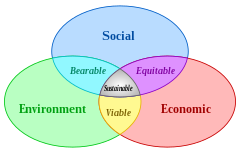
Social Sustainability in the Workplace

A Venn Diagram that intersects social
sustainability with environmental and
economic sustainability.
A situation can be viable, but if it is not
bearable or equitable it cannot be
sustainable.
At our team meeting every month, a volunteer shares a sustainability tip to help us be more sustainability-conscious. This month was my turn, and I shared a little about social sustainability.

According to Social Life, a UK-based enterprise specializing in place-based innovation, social sustainability is "a process for creating sustainable, successful places that promote well-being, by understanding what people need from the places they live and work. Social sustainability combines design of the physical realm with design of the social world – infrastructure to support social and cultural life, social amenities, and systems for citizen engagement and space for people and places to evolve."

Social sustainability has many aspects to it, and you can read more about it at the United Nations Global Impact. Since our tips focus on small changes we can do today, I decided to focus on the one that might be the one the most immediately within our control. Namely, the idea that a workplace is not sustainable without employee retention; and workplaces lose money in production and staffing every year due to staff burnout; and it’s important with everything going on that we are sure to make our workplaces as socially sustainable as possible. I was in fact so happy to learn about this whole concept, because it rectifies the problems I have with the term "self care"-- while I was on board for awhile, "self care" has seemed to become this catch-all of workplace happiness and quite frankly, I've begun to think about it as a way that toxic workplaces can blame employees for their own low morale or other reactions to systemic workplace toxicity. This article helped to validate those feelings when I thought it was just me. I like viewing workplace culture through the social sustainability lens because it seeks to work on the workplace as well as the individual. It's about how we can make small changes to improve our workplace, not just about how we can steel ourselves against workplace toxicity as if it is an unexplained phenomenon that cannot be helped.

Stressful situations can flip your lid, and I know regular readers are familiar with this term but here is a video that explains it (it talks about kids, but we all need it!) Here are some things that have worked for me to stay engaged when it's tough:

Thursday, February 16, 2017

Summer Reading Hype videos: Call for Contributors

Quote by Brene Brown written in black on a blue background. Text says:
"You either walk inside your story and own it or you
stand outside your story and hustle through your worthiness"
Source
All right everyone, I know a lot of us are feeling it right now. Doubling down to welcome our patrons, worrying about a bunch of different stuff. Perhaps your compassion fatigue is pretty high and  your regular attempts at self-care aren't working as well as they normally are.

I've got a post brewing that addresses this new normal, but until then, I figured I would put out this call:

Did you enjoy last year's Summer Reading hype videos?
Do you want to contribute to a culture of support in the Youth Services community?
Do you have tips, commiseration, encouragement or just plain humor that you want to share, connecting to others to lift each other up when the going gets tough?

I'm currently in search for volunteers to create a new batch of Summer Reading hype videos!

Thursday, December 29, 2016

Iron Fist: The Class PLUS Programming for School-Agers

HEY EVERYONE.

(This post is ridiculously late, I know. Look out for a post sometime in the New Year about what I've been up to this fiscal year! I really can't wait to share)

Looking to reconsider your space and programming in the New Year with your kid patrons in mind?

Looking for a resource that might save you some money that you don't have for a design consultant?

OR have you just recently fallen down the rabbit hole of my Iron Fist posts and want to sink your teeth into behavior management at your library?

Well you're IN LUCK: I will be running the course "Child Development, Library Space, and Behavior" January 23-March 3, 2017. It's an asynchronous class with a very doable work load (2 discussion questions a week; a culminating project of your choosing; and you're done) with tips you can use right away.

This course is designed with the student in mind: content to digest, questions to help you reflect and synthesize with classmates; and hopefully, a frame of reference that will stick with you as you continue to make changes in your library. I am here for you to get as much out of this class as you can, and there are a few different ways you can engage to make the class the most meaningful it can be for you.


Ready to register? Click this link to get more information. Register by January 9 to get 10% off!

Can't make it? That's okay.  I wanted to also share with you a couple of videos I put together in the past year. They're both only one take, and are pretty long, and I apologize there are no captions or subtitles. From now on, I will make sure to retain my transcripts for further accessible sharing:


2nd and 3rd grade programming from Bryce Kozla on Vimeo.
This video was done right after my "Top Five Places to Hide and Cry in Your Library", I care way less than in previous videos I've made about whether your see my CP-hand or not.


Special Programs and No-School Days from Bryce Kozla on Vimeo.
This video was done soon after my move to Oregon, amid watching lots of WWE promos and the reality show "Legends House", and I think it shows. I'm loud. I point a lot. Like, way more than normal. I might as well say "Listen here, Mean Gene." My accent is still pretty bad in this one. NOTE TO SELF: Even though it looks good here, never get that haircut again. EVEN THOUGH it looks good here.

What professional development resources are you digging lately?

Tuesday, December 20, 2016

"There Goes Your Hero": An Accessibility Series Post

Accessibility series logo

Chris Frantz is the artistic mastermind behind my blog design and the Accessibility Series logo (check out her amazing business, On a Roll Designs). I've known Chris Frantz for 20 years, mostly as an acquaintance; but it wasn't until we reconnected on Facebook that we became closer. I found out over Facebook that she has cerebral palsy, like me-- or, as people with cerebral palsy on the Internet call it, we're both "ceeps"*. When I first thought of the Accessibility Series, the very first post I ever wanted was this one, originally published by her  on her personal website in November 2013.

 “What are you going to call me?”

I looked up, probably from reading celebrity gossip. “What’s that?”

“On the blog,” my husband clarified. “What are you going to call me?”

It was a fair question, and one I’d been posing to myself since I’d decided to start this project. See, in my years on LiveJournal he came to be known as Mr. Beets, a takeoff on my nom de pixels “Bears Eat Beets.” (FACT.) On Facebook I usually refer to him as “my better half,” “mah boo,” and other similarly corny titles. In real life he gets tagged with all sorts of affectionate nicknames, most of ‘em scatological in nature.

His query prompted all sorts of suggestions from both of us, and eventually devolved into us reciting the epic list of David Ryder’s many monikers from Mystery Science Theater 3000 (which tends to happen with more discussions in our house than it probably should HAHA IF THAT'S POSSIBLE).

By the end we still didn’t really have an answer. I couldn’t come up with anything good on my own, either.

I’m going to call him Brandon. Because that’s his name.

Brandon is a lot of things. He’s a dork of the highest order. He’s a pub trivia dream teammate. He’s a sabermetrics devotee. An engineer. A borderline socialist. He’s the owner of an insanely good head of hair and he’s our fat cat’s favorite cuddle buddy. He’s both a mature appreciator of meta humor and a giggly seven-year-old when it comes to fart jokes. For me personally, he’s a lover (as much as I hate that word), a protector, a fan, and a support. He’s a caretaker - I don't just mean he hugs me when I'm down or makes me soup when I’m  sick; my well-being and the fulfillment of just about every basic need is essentially in his hands. Most of all he’s the best best friend - he listens, he makes me laugh harder than anyone else, and he calls me on my shit.

What he is not is a hero.