Showing posts with label rant. Show all posts

Thursday, December 19, 2019

Why "What Happened to You?" Isn't Trauma-informed

I just finished up my first run of my Trauma-Informed Care: An Introduction for Libraries course.

I hope to run it again next year, but something came up that I felt I should clear up.

There are a lot of different training opportunities lately coming at trauma in the library at different angles.

Quite a few of them start attempting to shift thinking about trauma with the notion that trauma-informed care "seeks to shift the clinical perspective from 'what’s wrong with you' to 'what happened to you'". I can't pinpoint the origin of this quote, but it's been used by such respected organizations as SAMHSA.

This phrase, quite deliberately, does not appear in any of my training materials. That's because I don't believe it's true.

title text in black on a blue and green background


At its most basic, I can understand what this is trying to do: make people who have not experienced trauma that has reshaped their brains start to blame circumstance rather than the people themselves when they have a frustrating interaction. Apparently, wondering what happened to someone is supposed to build empathy so we can act more compassionately.

I humbly submit that thinking this way can have the opposite impact, and instead can inspire pity and possibly resentment. I also contend that asking this question isn't trauma-informed, and is potentially harmful. It also assumes that library staff do not have backgrounds in trauma, which is not universally true.

To demonstrate how this framing might be problematic: here's how a person whose brain has been rewired to expect stress might answer these questions, speaking from experience:


Wednesday, August 15, 2018

Should I Share This Inspiring Story About Disability? A Checklist

TL;DR: Usually, no.


NOTE: If you're new here, welcome! When I write about accessibility, you will find that I use the terms "people with disabilities", "PWD", "the disability community", and "disabled people" interchangeably. This is something I deliberately do to challenge our institutional insistence on "person-first language."

The other night I was dismayed to see several people I follow on social media sharing, liking, and "loving" the same new viral story about a PWD. These stories are great for the people and their families, when shared personally and on their terms. But then, sometimes the stories are picked up for likes and shares, and go viral  by playing into the abled narrative: disabled people don't just live their life and enjoy new experiences for their own sake; they exist to teach everyone about how grateful we should be to be able to do something they can't.

I was so confused as to why, after so many posts, conversations, and shared links, that people close to me still didn't get it. Didn't think critically about this story and whether they should share it before hitting "share post." Didn't think about the lived experience of PWD before deciding that the person featured existed to teach the world about gratitude. I wondered what I was even doing here. I wrote a FB post about it, then deleted it almost immediately, thinking about the fights I didn't want to have.

I slept on it and decided to write this post instead.

This, of course, is not just about that one post. I've also seen posts across groups and Twitter threads where library staff share their sweet stories to keep us all going-- and some of these happen to specifically mention the fact that the person they were helping was disabled, or "looked" disabled. Occasionally these posts are called out in the comments, to be defended as "I just wanted to share a story." Members in groups tag mods who assert that it's the job of disabled members to educate other members, that everyone is "still learning." (if you're serious about learning, there is a Facebook group-- here-- that exists for PWD to volunteer their time to answer questions). As if Google doesn't exist. As if we're not all information professionals.

So I decided to make checklist about whether or not to share stories about disability you find "inspiring", particularly if you are an abled person.

Thursday, March 24, 2016

What is a Librarian: An Unsolicited Rant

Yesterday I checked my phone in the morning to find that Book Riot posted an article on non-degreed librarians, and how they have value as humans.


As I read it, that’s what this article was about.


I was disappointed, but not surprised, at the number of negative comments that this article received.


I could write here the many arguments I’ve had when this topic comes up and the comment section explodes: about the process to become a brewmaster and how there are people who run breweries or make beer who are NOT brewmasters, technically (they are usually called head brewers). Or I could talk about the one time a child ran me down in a grocery store calling for her “library teacher” and how I said hi to her rather than explaining that my teacher certification lapsed years ago (and even then, I was never certified to teach in THAT state). Or even how people who are nurses for their entire careers have to take an updated test every few years to prove that they can still Be a Nurse Good; so please stop with “librarians are the doctors/para-professionals are the nurses” because last time I checked it was not a universal requirement for even librarians to keep up with certifications (I mean, it may be that April will arrive and I will have spent 5 years in libraries and I will be summoned to engage in a Hunger Games-style competition using only the Dublin Core, so stay tuned). But instead I want to hit a bit closer to home here, parking this officially in Unsolicited Rant territory.


This was not the only thing I saw shared on social media yesterday. Another widely shared link was to a Libraries Transform post. The supporting text, when shared by ALA, that accompanies this post is “Librarians are early literacy experts!” This was shared on Facebook, at the time of this writing, 496 times. That many shares tells me that a lot of librarians agree with it. And before I recognized the funny juxtaposition that inspired this post, I was kinda pissed.

Monday, January 4, 2016

I Resolve to Rock in 2016: Choice. Empowerment. Strengths. Skills.

Well everyone, I've had quite a year! As I was thinking about a reflections post, my thoughts ended up at a resolutions post; and while I'm really not one to make resolutions, I figured some considerations and commitments for the New Year might be in order. So here's one for Storytime Undergroud's Resolve to Rock campaign.

Possibly the most challenging, most nerve-wracking, but overall most rewarding thing I added to the library conversation in 2015 was "It's Always Been that Way: An Unsolicited Rant" (Sept). Since then, I've been thinking a lot more about trauma-informed workplaces, and even asked my team members to join for a day-long training with Trauma Informed Oregon. I was so delighted with the feedback on our attendance, and it's spurred so many conversations.

This week I was again reminded of my dedication to a trauma-informed workplace when reading "Private Lives" at Hi Miss Julie,  which is not only a triumphant return to blogging for Julie, whose articles have continued to inspire far passed their posting dates; it also has clearly struck a chord in the library world for different reasons.

One thing that makes this post so powerful, I think, is her approach: She talks about a problem; she talks about what works for her, AND she talks about a time when she was personally involved in the type of ethical issue she ponders.

What I have seen happen so often with conversations like this is that they can spiral into a conversation made up of "don't" posts. And I truly hope that doesn't happen. Because I have a real sense that many individual librarians whose frustration translates to acting in questionably ethical ways come from backgrounds in trauma. Because when your lid is flipped, you're unable to think logically. What people in this position may respond to is not more shame, To be honest, not many people do, in general. I know I don't. And it's not that I think we need to treat people with kid gloves, but I DO think that we need to act in trauma-informed ways (and I really do think Julie's post is framed very well through this lens Seriously, go back and read it!). Because here's the thing:

Thursday, September 10, 2015

"It's Always Been Done That Way": An Unsolicited Rant

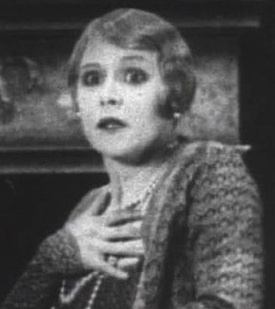
I have a confession to make: I’m a pearl clutcher.


Okay, so maybe not exactly, but I have caught myself in the title of this post a few times.

While this fact isn’t the most inspiring thing in the world, it’s true. I’ve done some debatably-innovative-depending-on-who-you-ask-but-whatever-I’m-proud things. AND, I’ve uttered the phrase “It’s always been done this way.” Sometimes with a judgy air for the practice; sometimes in earnest and with a tinge of defensiveness.


Black and white picture of a woman clutching her
pearl necklace.
I thought that maybe talking a little about it might shed some light for the “pearl clutchers” and the “change agents” alike, because the perception seems to be that we can’t find common ground; that we’re either one or the other. And I don’t think it has to be that way. In fact, I think that working together, and playing to each other’s strengths, can help us create a culture of librarianship that is overtly kind. And not just because you’re working tirelessly on the Next Big Thing OR because you love every piece of the collection so much that you can’t bring yourself to weed. I see you all. And you have value. And we all should feel valued, because that’s the only way we can do our best work. Together.

Monday, January 5, 2015

I Resolve to Rock in 2015: Mottos to Librarian By

This post is in conjunction with Storytime Underground's Resolve to Rock campaign.

I've written and rewritten this post like 500 times now. I'm torn, because: 1) In 2014, The Profession (what I've come to call the angle of librarianship which is akin to the phrase "The Business" in professional wrestling-- the aspects that help turn entertainment into sport) challenged a lot of people, apparently, including me. Resolutions sound exhausting. 2) I'm not one to normally make resolutions. 3)Actually, I think "resolutions sound exhausting" pretty much sums it up.

And then Brytani wrote a post that gave me feels. And so I thought: okay I'll write a resolution post. And then Arielle wrote a post about not being able to ever actually plan for your life. And seriously, everyone, if anyone knows what she's talking about when it comes to Your Life as a Ride, it's Arielle. So I decided to kind of let both these posts shape mine. Rather than resolutions, I'm going to take lessons I learned in 2014 and turn them into Mottos to Librarian By in 2015. Feel free to use them yourself, and add yours in the comments!

Monday, March 3, 2014

Are Your Programs S.A.F.E.? A Librarian Look at the Afterschool Alliance Report

Last week, the Afterschool Alliance published a literature review/report called "Taking a Deeper Dive into Afterschool: Positive Outcomes and Positive Practices." First of all, if you didn't know the Afterschool Alliance was a Thing, I forgive you; but please immediately rectify this situation by adding their incredibly informative website to your radar and maybe even following them on Twitter.

Now, many of us librarians don't have the time, resources, or community interest for a daily/weekly afterschool program that this report focuses on; but we definitely can take some great suggestions from its Positive Practices to make our planning more deliberate to set our kid patrons up for success at our programs.

First, some awesome and empowering words about our role in these kids' lives:

  • A great feature of our programming is that we don't have to focus on standardized assessments and academic achievement. This allows us to focus on the meat of success in afterschool programs: personal development, such as social and emotional growth. (page 8 of PDF)
  • a meta-analysis by the Collaborative for Academic, Social and Emotional Learning (okay I want to read everything by them right away, don't you?) found that children who attend afterschool programs "saw a significant improvement in their perceptions of themselves, improved positive social behavior and a decrease in problem behaviors" (page 8 of PDF)
Note that due to increased pressure of testing and emphasis on assessment-driven instruction (which may take intervention into the afterschool realm, like Club Z as an afterschool offering at Title I schools), we public libraries are uniquely posited to offer personal-development-focused programming. How does our programming support social and emotional growth?

Thursday, January 9, 2014

It's January, and You're Stellar.

We all know by now (or maybe we don't) that I am not a New Years Resolution maker. Yeah, I get it, I wrote a New Years Resolution thing for you to try-- but in my defense, you can try it at any time (in case that wasn't clear by the title that includes the words "new" and "year" and "resolution". Sorry about that).

Here's my thing with New Years Resolutions, and goals in general for that matter:
1. You make a resolution to be something other than you are.
1. You live your life always looking at the future, and disappointed in things you DIDN'T DO (part of that "starting in the negatives" I mentioned before when talking about being a new hire, but throughout your entire life).
2. Point #1 really sucks, seeing as though your life is CURRENTLY HAPPENING RIGHT NOW. Cue guilt for life "not lived in the moment".
3. To counteract this, you resolve to LIVE RIGHT NOW NO I MEAN NOW NO I MEAN NOW.
4. See #1.

This cycle feeds the Impostor Syndrome Beast really well.  And if that's how you feel when it comes to New Years Resolutions (I know I do), that Turkey Picture up there is just for you.

Tuesday, December 17, 2013

Hey. Read: An Unsolicited Rant and a New Year’s Resolution


Note: this post is about the problem I personally have with aliteracy; and if you are currently aliterate, steps you can take to change that, if you'd like. If you or someone you know struggles with direct or indirect effects of illiteracy (functional or not), there are places that can help. One of my favorites is the website for the Florida Literacy Coalition, which is full of resources on the subject.  

I’ve heard and read about proud non-readers before, but my social media feeds lately have been full of people who say things like, “So glad this became a movie because I don’t read” and “if anyone gets me an E-Reader for Christmas I’m throwing it away” and various other ways to inform the world that this person dislikes written communication. People who have the means and opportunity to read, and yet proudly say that they don't.  Not like I actually care, but I originally wrote this post at 4 AM on a Friday morning because I couldn’t sleep because of People Like You.

I’m here to tell you: it’s most definitely not your fault that the word “reading” gets you so apathetic. Chances are you, like me, were told outright that you needed to take standardized tests because if you were sick that day the class wouldn't get enough money. Or maybe you went to a school where bodies in the seats weren't considered currency, but regardless your literacy was treated as a means to an end, rather than the gift to yourself that it is.

You were wronged; it's okay to be mad about it. But reading has so many personal benefits and the only person who is missing out by not reading is you.

I once was like you. It’s true. Me. The librarian and educator who literally went to school for reading, twice, and once to obtain a reading-related job. I went to undergrad for English because I wanted to make sure I didn't drop out, and I enjoyed reading books. By the time I graduated with honors in 2004, I HATED READING BOOKS. Freaking hated it. Though I still believed in the importance of reading (which is why I went back to school to get my literacy development Master’s degree) I personally did not pick up a book I hadn't read before for leisure between the years of 2004-2010. Reading felt like a chore, and I couldn't fully enjoy stories because I got hung up with stuff like “word choice”. My biggest pet peeve when reading is still when an author rediscovers a word and then uses it three times in one chapter. It took me awhile, but I got over it in favor of trying to really lose myself in a story.

Thursday, September 26, 2013

Prescriptions for Literacy: An Unsolicited Rant

Source

“If children know six nursery rhymes by age four, they are more likely to be in the top reading group at school by age eight.”
“Experts in literacy and child development have discovered that if children know eight nursery rhymes by heart by the time they’re four years old, they’re usually among the best readers by the time they’re eight”
These are two quotes attributed to Mem Fox. That is each quote in its entirety. They both get at the same thing, but have different ages and different numbers of rhymes. And, there is no citation

These are the things that keep people like me, Amy at Catch the Possibilities, and Mel at Mel’s Desk awake at night. Probably because I found a great cohort of nerds that I have the pleasure of talking shop with at all times. In case you’ve ever wondered what my Twitter feed is all about, it’s mostly discussions that lead to rants like the one you’re reading right now. You're welcome.

Thursday, November 8, 2012

Readability Measures and Libraries: An Unsolicited Rant

Yesterday I got an e-mail from a friend, for whom I had run long-distance reader's advisory. She was looking for a historical fiction book for her 4th grader to write a book report. Her fourth grader is an avid reader and so I knew I could have fun with it. I gave her about ten titles, from Gordon Korman's Titanic series to Dead End in Norvelt by Jack Gantos.

She got back to me and said that based on their AR established book levels, and since he tested at a 6th grade level on his readability test, he actually is not allowed to choose any of the suggestions I gave for his book report. Including two Newbery award winning contemporary classics; one of which was Bud, Not Buddy, which should probably be read by all 4th grade boys everywhere. The aforementioned Gantos title even has a copy housed in the teen section of our library. But no matter; its book level comes in at a lowly 5.9.